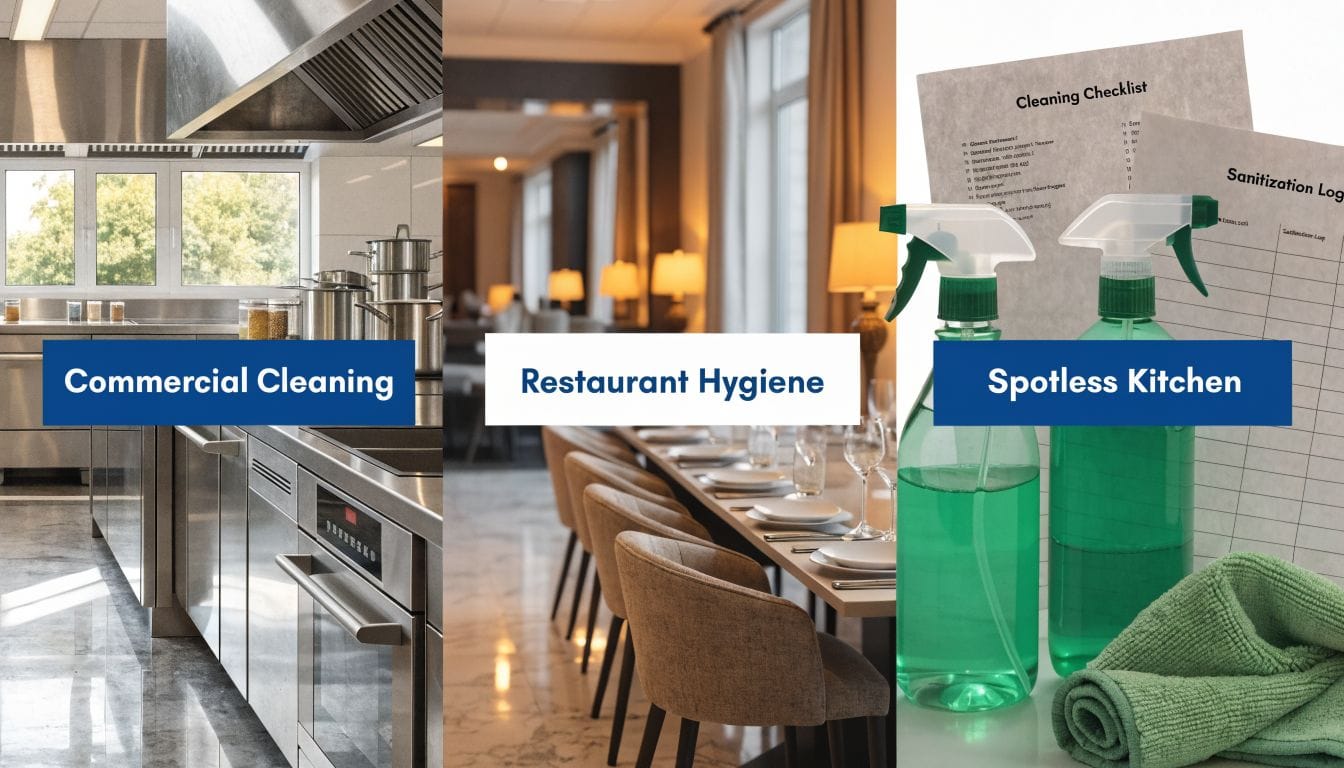
If you’re running a restaurant, you already know where the pressure sits. A customer notices a sticky menu, a washroom smells off at 7 pm, grease starts building behind the line, or an inspection lands on the wrong day. None of those problems stays small for long.
That’s why commercial cleaning services for restaurants need to be treated as an operational control rather than a last-minute purchase. The right contractor protects food safety, supports inspection readiness, keeps service moving, and reduces the risk of reputation damage that starts with one complaint and spreads fast.
Why Professional Cleaning is Your Restaurant’s Best Investment
A new manager often starts by looking at cleaning as a line to trim. That usually changes after the first near miss. One bad close-down clean can leave dried food on prep surfaces, grease around cooking equipment, and washrooms that undermine everything the kitchen got right.
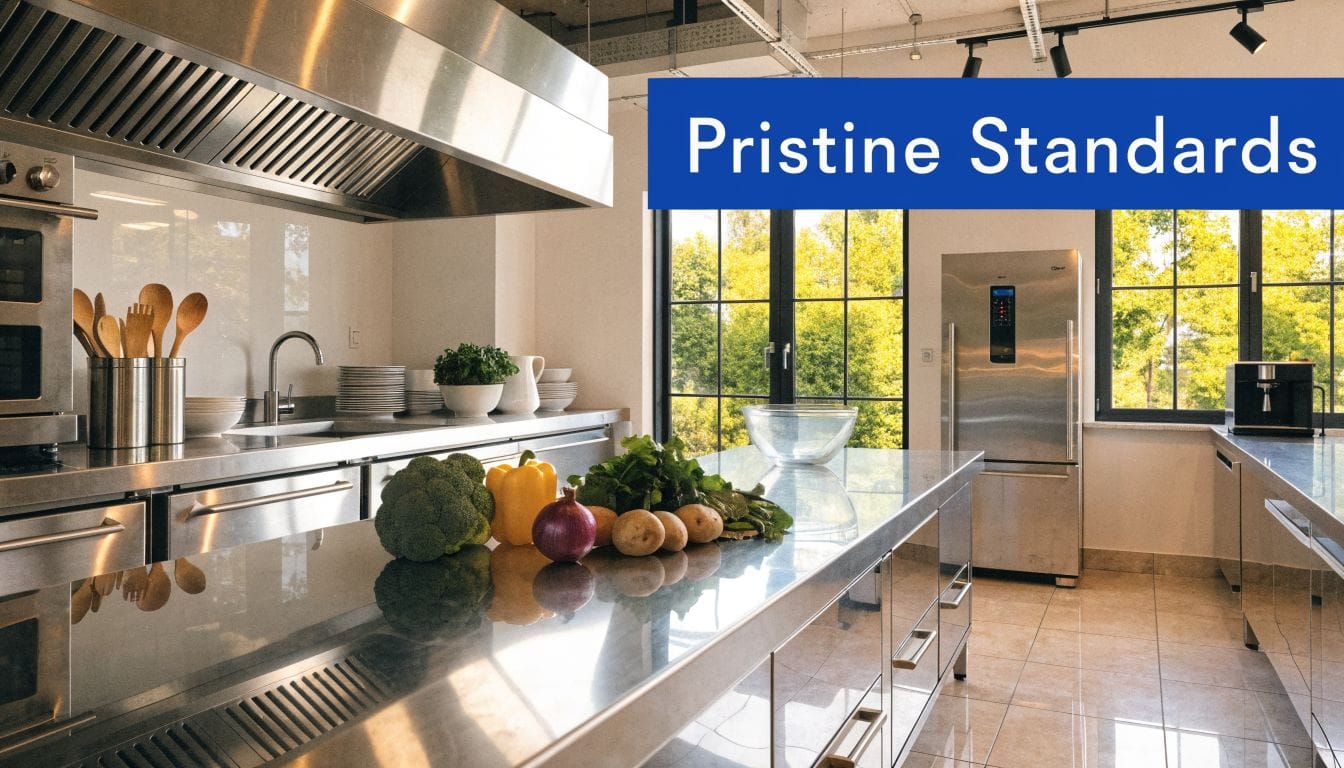
In the UK, that risk is public. The Food Hygiene Rating Scheme rates businesses from 0 to 5, with 5 indicating very good hygiene standards. This matters because customers use cleanliness and hygiene cues when deciding where to eat, as noted in this restaurant hygiene and cleanliness overview. A cleaning failure doesn’t just create a mess. It affects confidence, reviews, repeat visits, and management time.
What the investment actually buys
Professional commercial cleaning services for restaurants buy consistency. That matters more than intensity. Most restaurants can manage one hard push before an event or inspection. The challenge, however, is holding standards every day when staff are stretched, deliveries are late, and the closing runs over.
A proper service also creates separation between production and sanitation. Your chefs should focus on food. Your supervisors should focus on service, stock, and labour. When specialist cleaners take responsibility for defined tasks, managers get clearer accountability and fewer grey areas.
Practical rule: If nobody owns a cleaning task by name, frequency, and standard, it usually isn’t being done properly.
The cost question is usually framed badly
Restaurant operators often compare a contractor’s quote against an hourly wage. That’s the wrong comparison. The correct comparison is against:
Lost management time spent chasing incomplete cleans
Operational disruption when equipment or floors become unsafe
Reputation exposure when customers notice visible dirt before they notice food quality
Compliance pressure when standards slip in the areas staff stop seeing
The UK commercial cleaning sector generated about £15.1 billion and employs roughly 700,000 people, according to this UK commercial cleaning market report. That scale matters because restaurant cleaning sits inside an established specialist services market. It isn’t an add-on. It’s part of how hospitality businesses stay open, safe, and credible.
The Spectrum of Commercial Restaurant Cleaning Services
Restaurant cleaning isn’t one job. It’s a stack of different jobs with different timings, tools, chemicals, and standards. Managers get into trouble when they buy a general clean and assume it covers a food operation.
Front-of-house cleaning
Front-of-house standards are judged instantly. Customers may never see your store room, but they’ll absolutely notice the entrance glass, floor edges, table bases, washrooms, and bins.
Typical front-of-house tasks include:
Floors and entrances cleaned to control slip risk and tracked-in dirt
Tables, seating, and touchpoints are sanitised between service periods
Washrooms checked, restocked, and cleaned on a set schedule
Windows and internal glass kept clear of grease haze, fingerprints, and splash marks
Many managers often under-specify. A dining area may look tidy in low light and still fail basic customer expectations up close.
Back-of-house cleaning
Kitchen cleaning has a different logic. It isn’t about appearance first. It’s about contamination control, safe workflow, and equipment condition.
Food-contact and high-touch zones need far more frequent attention than low-risk areas. Specialist guidance for UK commercial kitchens recommends daily sanitisation of all food-contact surfaces, weekly degreasing of hobs and fryers, and professional deep cleaning for catering ovens at least every six months, as set out in this UK commercial kitchen cleaning guide.
Clean what touches food most often. Deep clean what collects grease most aggressively. Don’t treat those as the same job.
Specialist cleaning work that gets missed
A lot of commercial cleaning services for restaurants look fine on paper because the checklist sounds full. Then you find the quote doesn’t really cover the hard parts.
Watch for these areas:
Ovens and cooking ranges that need degreasing beyond visible surfaces
Fryers and splash zones where grease polymerises and becomes harder to remove
Beverage machines and hot drink equipment that need sanitising and descaling
Dishwashers and warewashing areas that need cleaning before sanitising cycles
Floor-wall junctions and under-equipment zones where debris accumulates unnoticed
Deep cleans and periodic works
Not every task belongs on a nightly schedule. Some belong in a planned cycle. That usually includes heavy degreasing, moving equipment where safe, detail work at high level, and treating neglected surfaces that the daily staff can’t realistically tackle during service.
For restaurant cleaning, a contractor should act like a specialist, not like office cleaners in a kitchen. Restaurant sites need process control, correct chemicals, and people who understand food environments. That fits the wider UK market too. IBISWorld’s UK cleaning services category includes specialised cleaning, disinfecting, decontamination, and machinery-related work, which is much closer to a commercial kitchen reality than routine janitorial cleaning.
Meeting Your Legal and Food Safety Obligations
A clean restaurant isn’t automatically a compliant restaurant. You need evidence, routines, and a cleaning system that fits how the site operates.
HACCP and COSHH in practical terms
For restaurant managers, HACCP means identifying where food safety can fail and controlling those points. Cleaning matters because poor sanitation creates risks of contamination, allergen transfer, and unsafe food-contact conditions.
COSHH matters because your site stores and uses chemicals that can injure staff, contaminate food areas, or be applied incorrectly. A competent cleaning contractor should know what products are being used, where they’re stored, how they’re diluted, and what protective measures apply.
If a supplier can clean well but can’t explain their chemical controls, that’s a warning sign. If they can explain their chemicals but provide no records, that’s another one.
Evidence matters during inspection
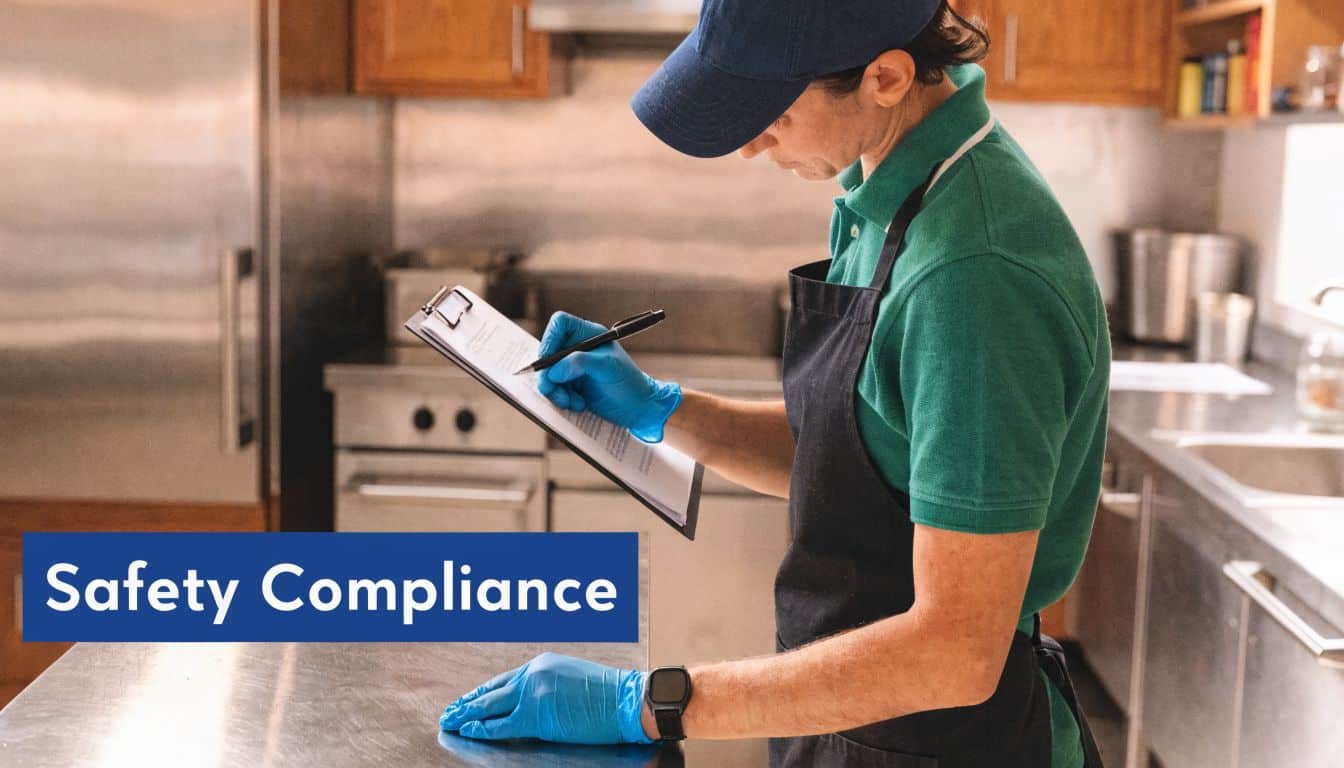
For a UK restaurant, proving compliance is as important as achieving it. An Environmental Health Officer inspection will assess not just visible cleanliness, but the management systems behind it, as explained in this guidance on restaurant cleaning records and due diligence.
That means your cleaning provider should be able to support your records with things like:
Cleaning logs showing what was cleaned, when, and by whom
Chemical usage and dilution records where relevant
Deep-clean reports for periodic specialist work
Issue reporting for damage, pest signs, drain odours, or hygiene defects
Verification notes where a task needs the manager’s sign-off
If a contractor says “we cleaned it” but can’t show when, how, and to what standard, that statement won’t help much when standards are questioned.
High-risk areas need specialist attention
Extraction systems are a good example. Grease in canopies, ductwork, and associated components isn’t just a cleanliness problem. It affects fire risk, air quality, and the broader hygiene condition of the kitchen environment.
If you want a practical benchmark for what this involves, commercial exhaust cleaning by Can Do is a useful reference for understanding why extraction cleaning sits outside routine wipe-down work.
For access-sensitive sites, staff screening also matters. If you’re assessing whether checks beyond basic identity are relevant, Cleaner Connect’s guide to the essential guide to a cleaner DBS check helps clarify when DBS checks may matter and when other vetting steps are more important.
Your Practical Hiring Checklist for Cleaning Contractors
Most hiring mistakes happen before the first clean. A manager accepts a vague quote, assumes hospitality experience, and only tests the supplier when something goes wrong. By then, changing contractors means more disruption than properly checking at the start.
The non-negotiables
Use this list when you’re comparing commercial cleaning services for restaurants.
Insurance in place
Ask for current Public Liability and, where relevant to the work, Products Liability cover. If a cleaner damages equipment, causes a slip issue, or works with chemicals in a food environment, you need to know there’s coverage behind the service.ID checked staff
Restaurants often give cleaners access after close, when cash handling points, stock rooms, tablets, or paperwork may still be on site. You need to know who is entering the building.Legal right to work and proper employment status
Don’t assume a contractor has handled this properly. Ask how they verify the status of the people attending your premises.Hospitality references
General commercial cleaning experience helps, but local hospitality references are stronger. A pub kitchen, takeaway, café, and table-service restaurant all run differently.
Questions that expose weak suppliers
Some questions cut through sales talk quickly:
Who supervises quality on-site?
What happens if a cleaner doesn’t attend?
Can you support overnight or post-close access?
What records do you leave behind after deep cleans?
How do you train staff on the use of chemicals in food areas?
A strong contractor answers directly. A weak one stays broad.
Where managers often compromise and regret it
The usual shortcut is price. The second is availability. A supplier who can start tomorrow isn’t automatically the right fit for a kitchen with grease-heavy equipment and tight close-down windows.
Hiring test: Ask the contractor to talk you through a fryer area, washroom touchpoints, and floor safety after a late service. If they answer in general terms, they probably clean offices better than restaurants.
DBS checks can be relevant in some restaurant settings, especially where cleaners have unsupervised keyholding access or work around sensitive records. They aren’t the only trust signal, but they shouldn’t be dismissed automatically. What matters is using checks that fit the access risk on your site.
How to Find Vetted Cleaners Using Cleaner Connect
Blind searching wastes time. You still have to ask about insurance, identity checks, references, availability, and whether the cleaner understands restaurant work. The difference is that you’re doing it from scratch every time.
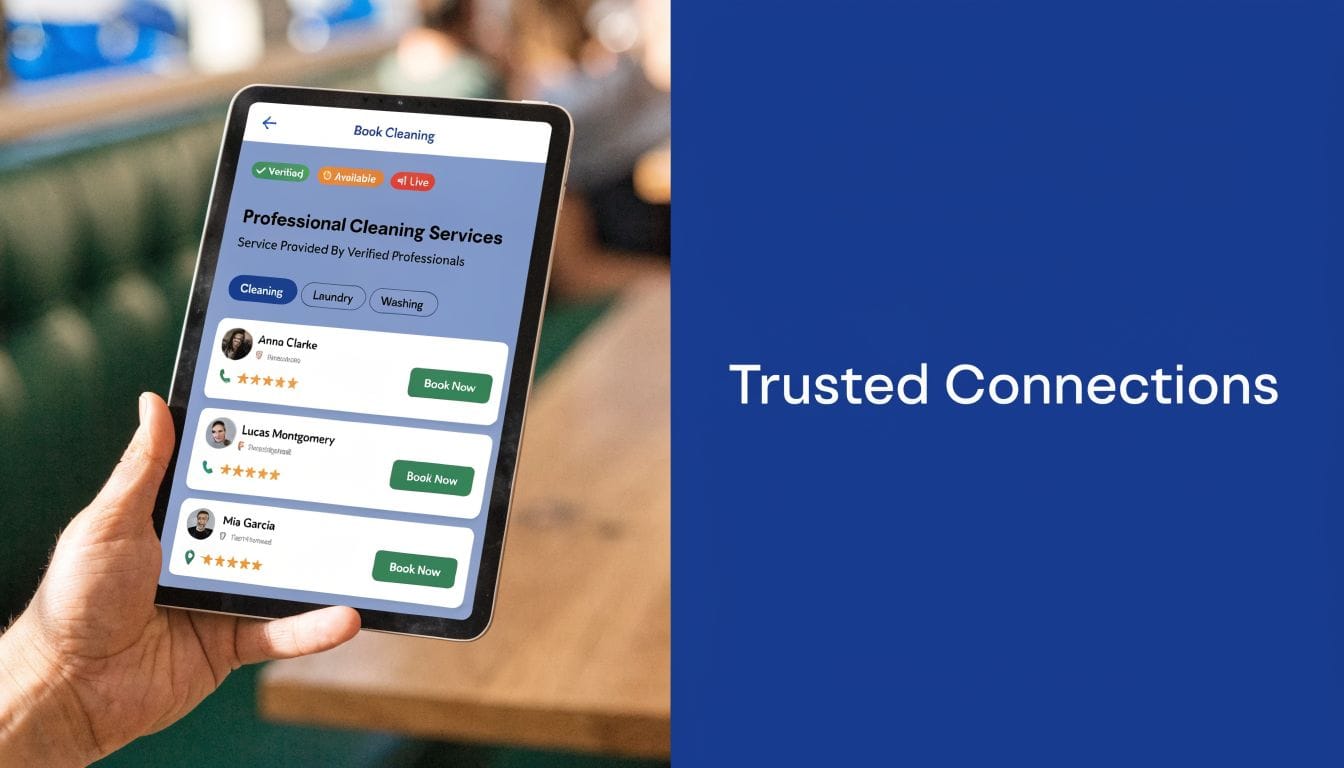
Restaurants also have a practical staffing problem. With high vacancy rates in the UK food service sector, many operators struggle to spare in-house staff for thorough after-hours cleaning. This is why outsourcing to a key-holding, insured service through a trusted directory can support continuity and hygiene, as discussed in this restaurant cleaning services overview.
Match your checks to profile signals
Cleaner Connect UK Ltd is a UK online directory where businesses can search by category and location, review cleaner profiles, and message providers directly. For restaurant managers, that matters because the core trust checks can be matched to visible profile information rather than left to guesswork.
Use the platform like this:
Look for insurance verification before you start comparing prices
Check ID status if the work involves keyholding or after-hours access
Read reviews carefully for signs of reliability, communication, and standards
Message the cleaner directly about restaurant-specific tasks and timing
The platform’s own explanation of how Cleaner Connect vets cleaners and builds trust from the start is worth reviewing before you shortlist anyone.
Ask better questions inside the platform
The biggest advantage isn’t just speed. It’s that you can ask sharper questions once the basic trust filters are in place.
Try questions like:
Can you work after closing and lock up securely afterwards?
Do you have experience with food-led sites rather than general offices?
What documentation do you provide after regular cleans or deep cleans?
Are your staff used to alarm procedures and restricted areas?
That matters because many buyers aren’t really looking for “a cleaner”. They’re looking for labour cover, access control, reliability, and documented hygiene support in one package.
What good shortlisting looks like
A sensible shortlist usually includes providers who can explain their process in plain language. You want cleaners who understand front-of-house presentation, kitchen contamination risk, and the operational reality of working when your team has already gone home.
The safer hiring route is simple. Filter first for trust signals. Then test for hospitality fit. Then compare scope and communication quality, not just hourly cost.
Structuring Your Cleaning Schedule and Contract
A restaurant cleaning arrangement fails when the frequency is vague. “Regular cleaning” is not a standard. “Deep clean as needed” is not a plan. Good contracts make the routine visible and remove room for assumptions.
Sample Restaurant Cleaning Schedule
| Area / Task | Daily | Weekly | Monthly / Quarterly |
|---|---|---|---|
| Dining floor and entrance | Sweep, mop, spot-clean spills, check slip hazards | Edge clean skirtings and corners | Machine clean or restorative treatment if needed |
| Tables, chairs, touchpoints | Sanitise during and after service | Detail clean chair legs, undersides, and booth edges | Inspect wear, staining, and build-up |
| Washrooms | Clean and sanitise fixtures, replenish stock, and remove waste | Detail vents, tiles, partitions, and door plates | Deep clean grout, high-level areas, and hidden surfaces |
| Food prep surfaces | Clean and sanitise after use and at close | Review method and product use | Verification review against food safety procedures |
| Hobs, fryer surrounds, splash zones | Wipe down and degrease as needed through service and at close | Full degreasing of accessible surfaces | Heavier deep-clean work if build-up persists |
| Ovens and internal cooking equipment | Spot clean spillages after shift | Specialist cleaning of accessible parts | Professional deep clean on planned cycle |
| Floors in the kitchen and back areas | Degrease, mop, dry for slip control | Detail drains, edges, and behind movable items | Deep clean under and behind equipment where safe |
| Glass, internal ledges, high touch points | Spot clean marks and hand contact areas | Full internal clean | Seasonal or periodic full detail |
The exact schedule depends on your menu, service volume, extraction load, and whether you fry, chargrill, or mostly reheat. A coffee-led site and a late-night takeaway should not have the same scope.
Contract points worth agreeing in writing
A proper service agreement should cover more than price and visit times.
Include:
Scope of work with clear task details by area
Frequency for daily, weekly, and periodic cleaning
Access rules covering keyholding, alarms, and lock-up
Missed clean procedure with response times and escalation
Consumables responsibility, so there's no dispute over supplies
Notice terms and what happens during handover to a new supplier
Reporting expectations for defects, pest signs, or hygiene concerns found on site
If you want a useful view from the supplier side, Cleaner Connect also has guidance on how to get commercial cleaning contracts. It helps you see what serious contractors should already be prepared to discuss when you ask for a proposal.
Secure Your Reputation with the Right Cleaning Partner
Restaurants rarely get judged in neat categories. Customers experience food, service, smell, washrooms, floors, and visible hygiene as a single experience. If cleaning slips, the whole brand feels less reliable.
That's why commercial cleaning services for restaurants should be hired with the same care you'd use for food suppliers or key supervisors. The right contractor supports safe trading, cleaner inspections, steadier operations, and fewer avoidable complaints. If reputation management is part of your wider focus, Review Overhaul's restaurant reputation guide is a useful companion read on how customer perception is shaped long before a review is written.
Use the checks above. Be specific about the scope. Ask for records, not promises.
If you're ready to compare local providers more safely, browse Cleaner Connect UK Ltd to search by area and cleaning category, review verified profile signals, and message insured, ID-checked cleaners directly.