
You know the routine. You spray the glass, wipe hard, step back feeling fairly pleased, then the light catches the pane and every smear shows up at once. It’s one of the most annoying cleaning jobs in the house because the effort rarely seems to match the result.
The good news is that streak-free glass isn’t down to luck. It usually comes down to using less product, better tools, and a more controlled method. Most failed attempts happen for predictable reasons: too much liquid, the wrong cloth, a tired squeegee blade, or conditions that work against you.
If you want to learn how to clean windows without streaks, think like a professional rather than a casual wipe-and-hope cleaner. That means controlling moisture, removing residue instead of spreading it, and finishing the glass before the solution has a chance to dry in patches.
There’s also a practical point worth saying early. Some windows are perfectly reasonable to do yourself. Others are awkward, high, or just too time-consuming to get right without the right kit. A clear finish matters, but so does safety. Both options can be the right call.
The End of the Streak: The Frustration and the Fix
The struggle isn’t because they’re careless. They struggle because window glass is unforgiving. On a mirror, a bit of haze often goes unnoticed. On a window, daylight exposes everything.
That’s why how to clean windows without streaks is less about scrubbing harder and more about getting the sequence right. Cleaners who do this well don’t flood the pane, don’t rely on kitchen roll, and don’t keep reworking half-dry glass. They use a repeatable method.
What usually goes wrong
A streaky finish often comes from one of a few common mistakes:
- Too much solution: Excess liquid leaves residue behind as it dries.
- The wrong wiping material: Paper towels and old rags tend to leave lint or smear grease.
- Dirty tools: A cloth that has fabric softener, dust, or previous product on it will drag that back onto the glass.
- Poor timing: If the pane dries unevenly, marks appear before you’ve finished.
- No water control: If drips run into cleaned sections, you end up chasing lines around the whole window.
Practical rule: Clean windows by removing moisture in a controlled way, not by spreading more liquid around.
There’s a reason professional results look different. The finish is cleaner because the process is tighter. Every stage has a purpose. Dust first. Apply a modest amount of solution. Move top to bottom. Clear the blade. Detail the edges. Buff only where needed.
Two good ways to get perfect glass
For many homes, a DIY routine works well once you stop treating window cleaning like a general wipe-down job. A decent squeegee, proper microfibre cloths and the right solution will improve results straight away.
For harder jobs, the smarter answer is often to hand it over. Tall exterior panes, stairwell windows, awkward extensions and glass above conservatories can turn a simple task into a frustrating half-day. If you’re aiming for how to clean windows without streaks, there’s no shame in deciding that the best method is knowing when to stop and call someone equipped for it.
Your Professional Window Cleaning Kit
A good result starts before the first drop touches the glass. If your kit is poor, your technique has to work twice as hard. Most household window problems can be traced back to flimsy tools, over-perfumed spray cleaners, and cloths that were never meant for glass.

The tools worth having
If you want to know how to clean windows without streaks, build your kit around control rather than convenience.
- A quality squeegee: This is the one tool that changes everything. A firm handle and a clean rubber blade let you remove water cleanly instead of smearing it.
- Two microfibre cloths: Keep one damp or working cloth for prep and one dry cloth for final detailing. Don’t mix them up once you start.
- A bucket or small bowl for solution: Even if you use a spray bottle for some windows, a separate container helps you avoid over-applying cleaner.
- An applicator or folded cloth: You need something that spreads solution evenly without soaking the pane.
- A dry sill cloth: This catches drips before they creep back onto the glass.
Professionals also stay picky about their cloths. If you want a useful breakdown of what makes certain cloths perform better on glass, this guide to microfiber towels for cleaning is worth a look. The difference between a lint-free glass cloth and a general household rag is obvious once sunlight hits the pane.
The cleaner that works best
Professional UK window cleaners recommend an ammonia-free, distilled white vinegar-based solution using 1 part vinegar to 10 parts warm water, because the acidity helps break down mineral film without leaving residue, especially in hard water areas, according to Pella’s guide to cleaning windows.
That same guidance also matters for application. Instead of spraying the glass heavily, apply the solution to the cloth or applicator. It gives you much better control and reduces the over-saturation that often causes streaks.
Paper towels are a poor trade-off for glass. They may feel tidy in the hand, but they leave lint behind and reduce clarity.
Pella also notes that paper towels should be avoided, with lint-free microfibre cloths used instead, and that the final buffing should happen quickly with a dry microfibre cloth before lingering moisture dries on the pane.
DIY vs commercial window cleaning solutions
| Feature | DIY Vinegar Solution | Commercial Solution |
|---|---|---|
| Base formula | Distilled white vinegar and warm water | Varies by brand |
| Residue risk | Low when mixed and applied properly | Depends on formula and how much you use |
| Best use | Mineral film, routine window cleaning, hard water areas | Handy for convenience and ready-to-use application |
| Smell | Vinegar scent while working | Usually fragranced or neutral |
| Control | Easy to apply to cloth or applicator | Easy to overuse if sprayed directly on glass |
| Streak potential | Low if you use a squeegee and dry cloth finish | Higher if applied too heavily |
Commercial cleaners aren’t automatically bad. Some are perfectly serviceable. The issue is that many people use far too much, then keep wiping as it dries. That leaves a fine film that only becomes visible once the light changes.
What not to use
Many DIY window cleaning efforts fall short. Avoid these if your goal is how to clean windows without streaks:
- Paper towels: They leave lint on the glass.
- Old tea towels: They often hold detergent residue or fabric softener.
- Very soapy mixes: Heavy soap leaves a film that’s hard to remove fully.
- One-cloth cleaning: A single cloth becomes damp and dirty too quickly.
- Random household sprays: Many work well on shiny surfaces but not on clear glass in daylight.
If you need replacement tools, cloths, buckets or other basics, browsing dedicated cleaning suppliers can save you from wasting money on gimmicky products that look helpful but don’t improve the finish.
A simple kit beats a cluttered one
A lot of people overbuy for this job. They end up with three sprays, specialist wipes, and a plastic gadget that never leaves the cupboard. In practice, a reliable squeegee, two good cloths and a sensible solution do most of the work.
That’s the foundation. Once the kit is right, the method starts to make sense.
Mastering the Squeegee for Flawless Results
The biggest difference between average and professional-looking windows is usually the squeegee. Not the brand name. Not force. Not speed. Technique.
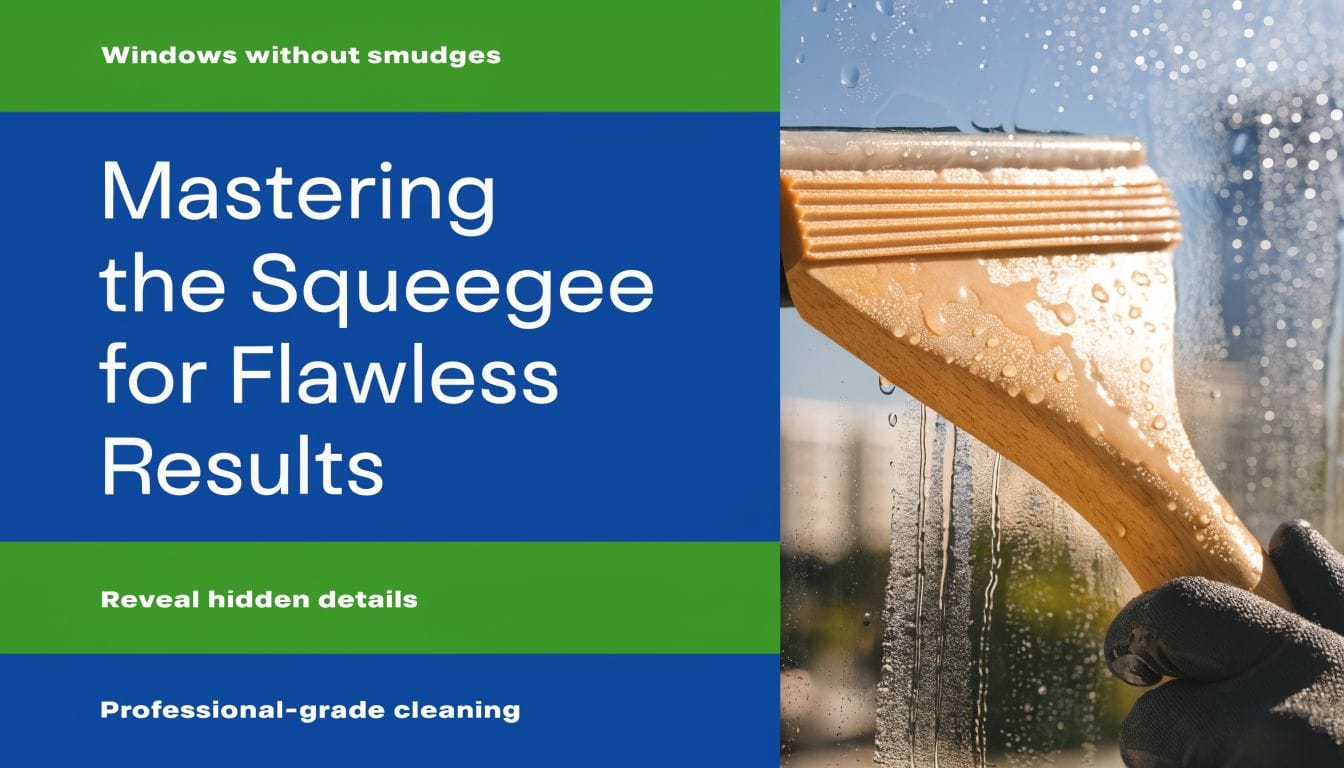
Expert window cleaners use a precise S-pattern with a slightly angled squeegee, which spreads water evenly and guides it downward to stop dirty water dripping onto already cleaned areas. Wiping the blade between each pass is also critical to avoid spreading residue, as explained in this overview of the professional S-pattern method.
Start with a properly prepared pane
Don’t go straight onto dirty glass with the squeegee. If dust, grit or dried debris is still on the surface, you’ll just drag it around.
Do this first:
- Dust the frame and sill
- Wipe loose dirt from the edges
- Apply a modest amount of cleaning solution to your cloth or applicator
- Cover the glass evenly without soaking it
The pane should look evenly wet, not flooded. A soaked window is harder to control and far more likely to drip into areas you’ve already cleaned.
The angle and movement that matter
This step is often missed. The squeegee should sit at a slight angle rather than flat to the glass. That angle helps channel water toward the dry edge and down the pane rather than trapping it under the blade.
Your movement should feel continuous. Start near the top and guide the blade in a smooth S-pattern or zigzag. Keep the pressure consistent. Too light and you leave water behind. Too hard and the rubber can chatter or skip.
A good rhythm looks like this:
- Start high: Give gravity somewhere useful to work.
- Keep contact: Don’t lift the blade unnecessarily mid-pass.
- Overlap slightly: That prevents narrow wet lines from being left behind.
- Work downward: Dirty water should always move to an area you haven’t finished yet.
The squeegee isn’t scrubbing. It’s directing moisture off the glass in a controlled path.
Wipe the blade every pass
This sounds small, but it’s one of the trade habits that changes the result immediately. After each pass, wipe the blade with a clean microfibre cloth.
Why? Because every pass picks up residue. If you don’t clear it, the next stroke can redeposit that dirt or leave a faint line. On larger panes, this is often the exact reason one stripe keeps reappearing no matter how much you buff.
Detailing the edges properly
Even a clean squeegee leaves a little moisture around edges, corners and the bottom seal. That’s normal. What matters is what you do next.
Use a separate dry microfibre cloth for detailing. Fold it so you’ve got clean sections to work with. Then lightly touch the edges, corners and sill. Don’t scrub at the whole pane again. If you wipe broadly across the glass at this stage, you risk undoing the clean finish you just created.
Inside and outside stroke direction
A useful professional habit is to clean inside and outside surfaces in different stroke directions. For example, one side can be detailed with a horizontal finishing pattern and the other with a vertical one. That way, if you spot a line later, you can tell which side it’s on without guessing.
That small trick saves time, especially when you’re checking your work from different angles.
Common technique errors
If your result still looks patchy, the issue is usually one of these:
- The blade is nicked or worn
- The glass was too dry before you finished
- You used too much solution
- You didn’t wipe the rubber edge
- You went back over half-dry glass with the same damp cloth
None of these are dramatic mistakes, but each one leaves marks that show up once daylight catches the pane.
The feel you’re aiming for
The best squeegee work feels almost calm. There’s no frantic polishing, no repeated rubbing at the same spot, and no dripping cleaner everywhere. Once you get used to that rhythm, how to clean windows without streaks stops feeling like guesswork and starts feeling mechanical in the best sense.
If one pane goes wrong, don’t keep buffing it endlessly. Re-wet it lightly, reset your angle, and do another clean pass with a dry blade. Controlled repetition works far better than trying to rescue streaks by rubbing them around.
Troubleshooting Streaks and Other Common Problems
Sometimes the method is sound and the result still isn’t right. That usually means the problem isn’t your effort. It’s the conditions, the water, or residue that hasn’t been fully removed.
Generic advice often lets people down because many window cleaning guides don’t address UK-specific issues like hard water mineral deposits, especially in places such as London and the Southeast, or the effect of overcast, humid weather on drying times, which can cause mineral deposits to set differently and leave persistent streaks. That gap is highlighted in this discussion of streak-free window cleaning challenges in the UK.
When the streaks look chalky rather than greasy
If the glass looks cloudy or marked even after a careful clean, there’s a fair chance you’re dealing with mineral residue rather than simple dirt. This is especially common in hard water areas.
The signs are usually different from ordinary smears:
- A pale, slightly crusty haze
- Marks that reappear after drying
- Cloudiness near the edges where water sits longer
- A finish that looks worse from certain angles
In these cases, ordinary wiping often isn’t enough. You need a solution that helps break down the mineral film, and you need to avoid adding more mineral-heavy water back onto the pane.
How UK weather changes the job
Bright sun can be awkward because cleaner dries too quickly. The British weather creates a different issue. Damp, still, overcast days can slow drying so much that residue sits on the glass longer than you expect.
That creates a frustrating effect. The pane doesn’t flash dry, but it also doesn’t clear cleanly. Moisture lingers around the edges, picks up tiny contaminants, and can leave marks once it finally evaporates.
Fixes for the most common failures
If your windows still aren’t clear, work through the likely culprit rather than starting from scratch blindly.
- Streaks after buffing: Your cloth is probably damp or carrying product residue. Swap it for a fresh dry microfibre.
- Cloudy finish in hard water areas: Use the vinegar-based mix covered earlier and keep the application controlled.
- Lines that appear only at the sides: Detail the edges more carefully with a separate dry cloth.
- Patchy drying on humid days: Work on smaller sections so moisture doesn’t sit too long.
- Smears that move around but don’t vanish: You’re redistributing residue, not removing it.
A streak that keeps returning in the same place usually points to residue on the glass or contamination on the cloth, not a lack of elbow grease.
A better way to think about timing
For UK homes, “cloudy day” advice needs a bit of judgement. Bright direct sun can dry product too fast, but very damp conditions can slow the finish too much. Aim for calm, mild conditions when possible, and keep your sections manageable.
If you’re also trying to make your overall routine a bit greener, these eco-friendly cleaning tips for a greener home are a useful companion to a simpler, lower-residue approach.
When the issue isn’t the glass at all
Sometimes what looks like dirty glass comes from the frame, seal or sill. Old grime in the corners can seep back onto the pane during cleaning. If that keeps happening, clean the surrounding areas more thoroughly before you tackle the glass again.
That’s one reason professional-looking results often seem so crisp. The entire window area is cleaner, not just the centre of the pane.
Cleaning High and Awkward Windows Safely
Some windows turn a straightforward cleaning job into a poor decision. Anything above a stairwell, over a conservatory, behind a deep sill, or high on an exterior wall changes the risk completely.
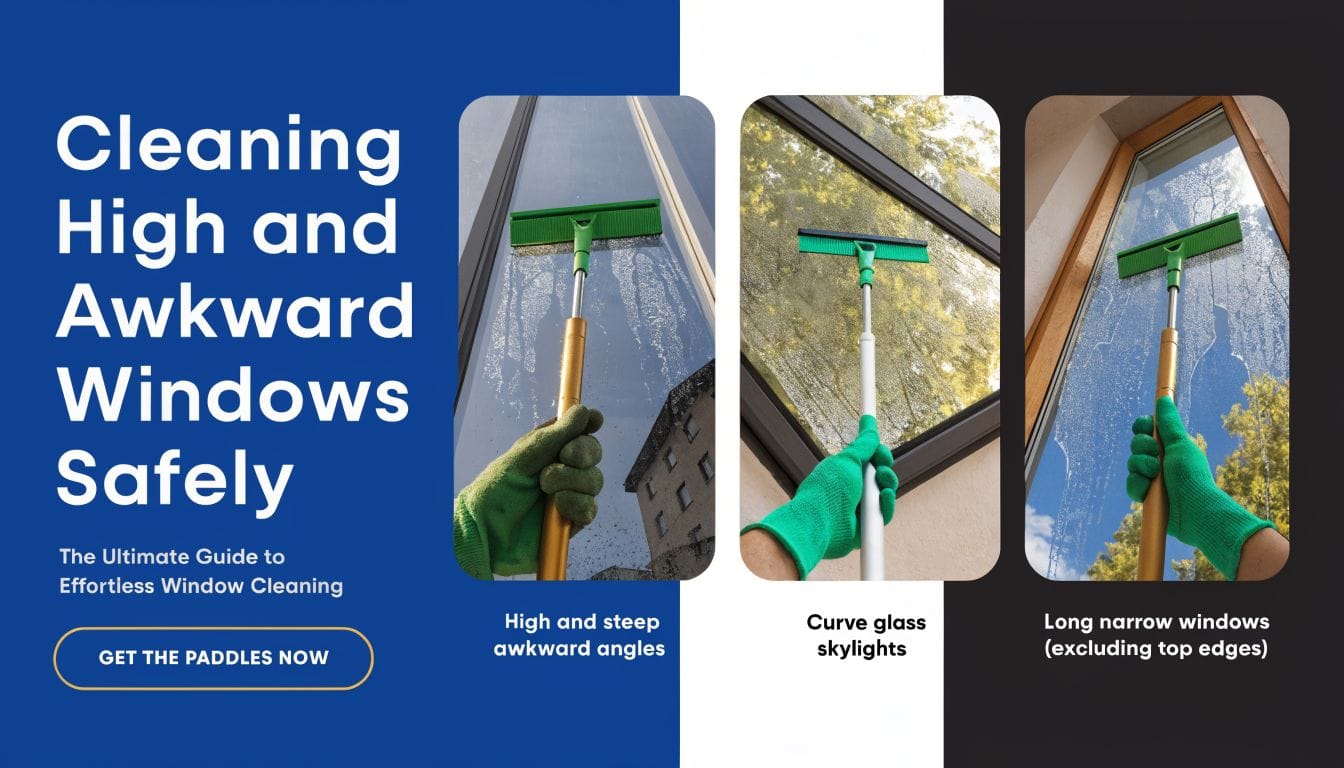
You can improve your reach with a telescopic pole, but reach and control aren’t the same thing. A tool that lets you touch the glass doesn’t automatically let you clean it well or safely.
The real problem with awkward windows
The main issue isn’t just height. It’s loss of stability and precision at the same time. To clean glass well, you need a consistent angle, a steady hand and the ability to wipe edges cleanly. That becomes much harder when you’re stretching sideways or balancing on steps.
A lot of DIY accidents happen during jobs people thought would “only take a minute”. Window cleaning encourages exactly the kind of overreach that causes trouble.
When DIY still makes sense
You can usually handle the job yourself if:
- The window is reachable from the ground
- You can keep both feet planted securely
- You can use your tools without leaning out
- You can see and dry the edges properly
In those cases, a pole may be useful. It’s particularly handy for awkward interior panes where the challenge is access rather than danger.
When it’s smarter to stop
There are jobs where the best answer is not doing it yourself.
- Upper-storey exteriors: Hard to reach and harder to inspect afterwards
- Glass above conservatories or extensions: Access is awkward and unstable
- Tall stairwell windows: The angle and footing are both poor
- Large feature glass: Difficult to squeegee evenly without experience
Safety and finish often fail together. Once you’re overreaching, your technique goes with it.
That’s why many people trying to master how to clean windows without streaks eventually divide the task into two categories. Standard panes are worth doing yourself. High and awkward windows are better treated as specialist work. That isn’t giving up. It’s good judgement.
Finding a Trusted Professional Window Cleaner with Cleaner Connect
Once a job moves beyond easy DIY, the next problem is trust. Clients don’t mind paying for help. What they mind is hiring blindly.
That matters with window cleaning because access, care and reliability all count. You’re not just asking someone to wipe glass. You’re trusting them to work around your property, turn up as agreed and handle the job properly.

What to look for in a window cleaner
A good professional should be easy to assess before you ever send a message. Start with the basics:
- Clear service information: You should be able to tell what type of work they cover.
- Local presence: Nearby cleaners usually make communication and repeat visits easier.
- Reviews from previous customers: These help you judge consistency and professionalism.
- Verification signals: These matter when you’re inviting someone to your home or premises.
If you’re searching for options, a dedicated directory makes this process much more straightforward than relying on a random social post or an old marketplace listing.
Why verification matters
The strongest trust signal isn’t a flashy advert. It’s proper vetting. A profile that shows checking and accountability gives you a much better starting point than a name and a mobile number.
For many customers, that’s the difference between browsing and booking. You want to know you’re speaking to a real business or genuine professional, not just taking a chance because someone commented “recommended” online.
How to compare cleaners properly
Don’t focus only on price. With window cleaning, the cheaper option can easily become the more frustrating one if communication is poor or the standard isn’t there.
Compare cleaners by looking at:
- Whether their profile feels complete and professional
- Whether reviews mention reliability as well as results
- Whether they appear suited to the type of property you have
- Whether messaging them feels straightforward
If you’re ready to look locally, the simplest place to start is the find a cleaner directory, where you can search by category and area, browse profiles, and contact professionals directly.
Why directories help with specialist jobs
This matters most when the work isn’t routine. If you’ve got upper-floor windows, awkward access or a property that needs a dependable regular cleaner, using a proper directory removes a lot of the guesswork.
You can review the profile, check feedback and make a calmer decision. That’s much better than rushing into a booking because the windows are annoying you and you want the job off your list by the weekend.
Hiring well is part of learning how to clean windows without streaks. Sometimes the best method is knowing when a specialist will do it faster, safer and better.
A better standard than trial and error
There’s a practical relief in handing over the windows that never go right. Not because the task is impossible, but because some jobs are worth taking off your own plate.
The aim isn’t to outsource every pane in the house. It’s to keep DIY for the jobs that make sense and use a trusted professional when the property, access or finish demands more.
Your Window Cleaning Questions Answered
Can I use washing-up liquid in a pinch
You can, but it’s rarely the best route for clear glass. Many people use too much, and the leftover film is one of the reasons windows look smeary afterwards. If you’re focused on how to clean windows without streaks, a lighter, lower-residue approach is safer.
Is newspaper still a good idea
Not really. It’s old advice that survives because it worked tolerably well for some people, some of the time. Modern printing and paper quality make it an unreliable choice, and a proper microfibre cloth is much cleaner to work with.
How often should windows be cleaned professionally
There isn’t one fixed timetable that suits every property. It depends on location, traffic, weather exposure and how noticeable the build-up becomes. Homes near busy roads or exposed areas often need more attention than sheltered properties.
Should I clean shutters before or after the windows
Usually before the final glass finish, especially if dust falls onto the sill or pane. If you’ve got interior shutters, this guide to cleaning plantation shutters is a useful add-on so you don’t end up putting dust straight back around the window you’ve just cleaned.
Why do my windows look fine until the sun hits them
Because bright light reveals residue and lint that normal room light hides. That’s why controlled drying, a clean squeegee and proper detailing matter so much.
If you’d rather skip the trial and error, Cleaner Connect UK Ltd makes it easier to find local cleaning professionals through a UK directory built around trust signals that matter. You can search by category and location, browse verified profiles, read reviews, and message cleaners directly, all without booking fees. For awkward, high, or time-consuming window jobs, it’s a practical way to find someone suitable with more confidence.