Finding a trustworthy cleaner shouldn’t feel like a gamble. But let’s be honest—it often does.
You need someone who is reliable, skilled, and safe to have in your home or business, yet wading through social media recommendations and unverified ads is draining. Too many people rely on these informal channels, and the results are hit-or-miss.
This guide is your roadmap to finding the right professional with total confidence. We’ll show you how to sidestep the guesswork and use a dedicated platform like Cleaner Connect to connect with genuinely vetted, local cleaners.
The Problem With Hiring Informally
The UK’s domestic cleaning market is huge, valued at an estimated £3.5 billion back in 2022. The trouble is, the industry is largely unregulated.
A 2021 Which? survey found that 28% of UK consumers who hired freelancers through informal routes ran into problems. Think no-shows, poor quality work, or worse.
This is where a dedicated directory like Cleaner Connect makes all the difference. Instead of taking a chance on a stranger from a Facebook post, you can start your search from a pool of professionals who have already had their credentials checked and verified.
Using a purpose-built platform is about more than just convenience; it’s about safety and quality control. It shifts the power back to you, the client, allowing you to make an informed decision based on facts, not just hopes.
A Smarter Way to Find a Cleaner
We believe the process shouldn’t be stressful. It should be about finding a dependable expert who can give you back your time and a sparkling clean space. This guide will help you do just that by focusing on what actually matters when you need to find a trustworthy cleaner.
Here’s what you’ll learn:
How to identify professionals with verified credentials.
Why checks for insurance and ID are non-negotiable.
Tips for using the Cleaner Connect directory to filter and find your perfect match.
By the end, you’ll have a clear plan for hiring a professional you can trust—ensuring the person you welcome into your personal space is a true and trustworthy cleaner.
First Things First: Get Clear on What You Actually Need

Before you even think about browsing profiles, a bit of prep work will make all the difference. Jumping straight into your search without a clear idea of what you want is a fast track to confusion and, worse, hiring someone who isn’t the right fit.
Taking a few moments to outline your needs transforms your search from a vague scroll into a focused mission. It helps you communicate clearly, get accurate quotes, and find a professional whose skills are a genuine match for your home or business.
What Kind of Clean Do You Really Need?
Not all cleaning is created equal. The first step is to figure out the main goal of the clean, as this directly impacts the type of professional you’ll need. Are you after general upkeep, a major one-off blitz, or something to satisfy a rental agreement?
Your requirements will almost certainly fall into one of these common service types, all available through cleaners on the Cleaner Connect directory:
Regular Domestic Cleaning: This is your bread-and-butter maintenance, usually happening weekly or fortnightly. The aim is to keep your home consistently tidy and hygienic.
One-Off Deep Clean: A far more intensive service that gets into all the nooks and crannies. It’s perfect for a seasonal refresh, after a party, or before the in-laws arrive.
End of Tenancy Cleaning: This is a specialist job. It’s a top-to-bottom, forensic-level clean required when you move out of a rental. The goal is simple: get your deposit back. It follows a very strict checklist.
Commercial Cleaning: Specifically for business premises like offices or shops. This work often happens out of hours to create a professional environment for staff and customers.
Specialist Services: Think jobs like professional carpet cleaning, oven cleaning, or external window washing. These require specific equipment and real expertise.
Knowing which bucket you fall into is crucial. If you need a meticulous end-of-tenancy clean, hiring a standard domestic cleaner might not cut it—they may lack the experience or industrial-grade tools for such a demanding job.
Create a No-Nonsense Task List
Once you know the type of service, get specific. Walk through your property in your mind. What are the absolute non-negotiables? A simple checklist is the best way to avoid crossed wires and helps a cleaner give you a price that’s actually accurate.
A detailed checklist is your most powerful communication tool. It ensures both you and the cleaner have the exact same expectations from day one, which is the foundation for a great working relationship.
Try organising your list by room. For a typical weekly clean, it could be as straightforward as this:
Kitchen:
Wipe all countertops and surfaces
Clean hob and splashback
Wipe exteriors of appliances (fridge, microwave)
Clean sink and polish taps
Empty bin
Vacuum and mop floor
Bathrooms:
Clean toilet, shower, bath, and sink
Clean and polish mirrors and taps
Empty bin
Vacuum and mop floor
And don’t forget to add anything unique to your home. Do you have pets and need pet-friendly products? Are there delicate marble surfaces that need special care? The more detail you can give upfront, the better. This groundwork is absolutely vital when you find a trustworthy cleaner who can genuinely deliver what you need.
Where to Find Vetted and Reliable Cleaners
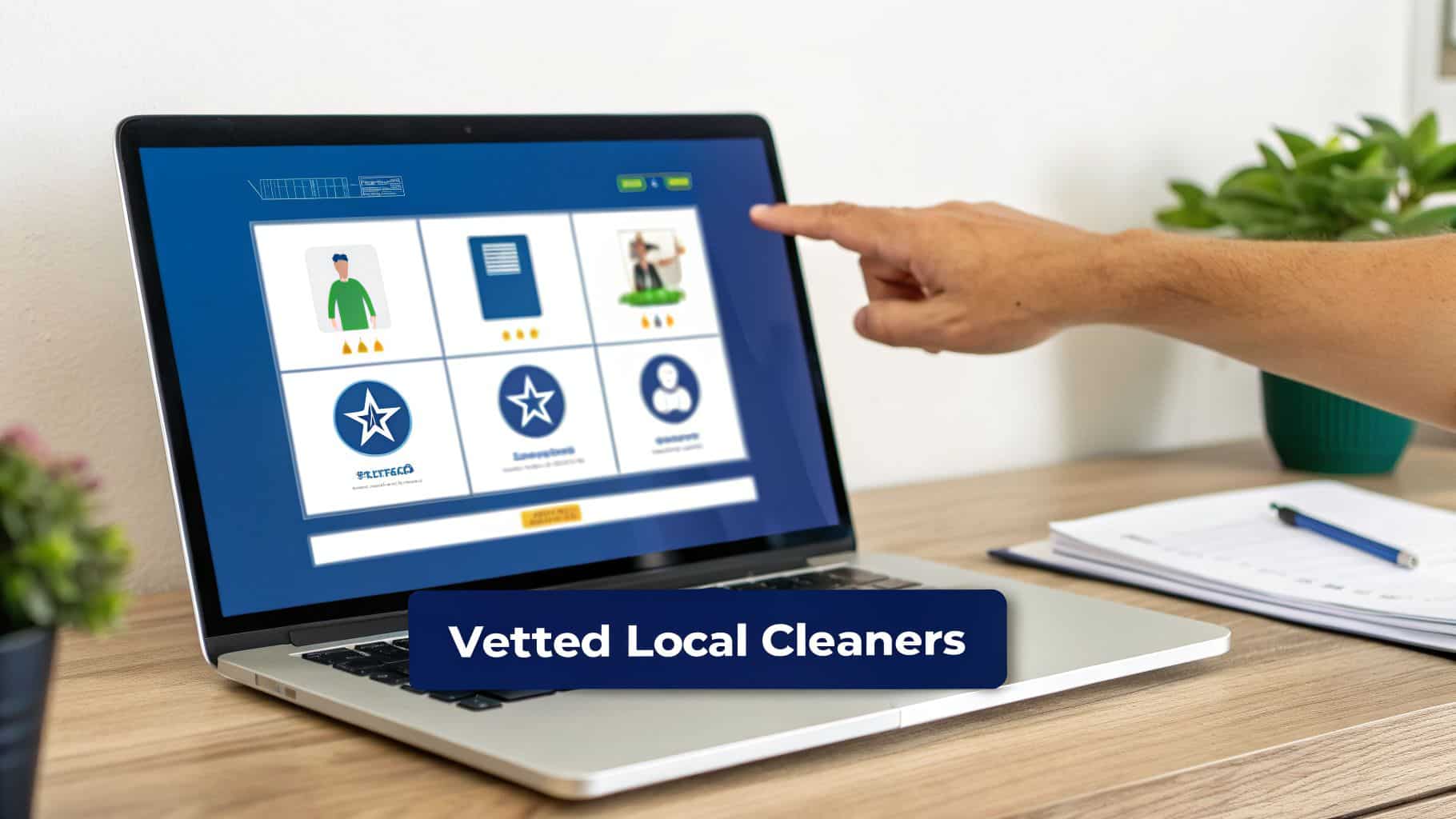
When you need to find a cleaner, scrolling through anonymous classified ads or taking a chance on a social media post can feel like a lottery. You’re left doing all the background checks yourself, with no guarantee of who you’re letting into your home or business.
The simplest and safest way to find a trustworthy cleaner is to use a platform built specifically for that job. A professional online directory like Cleaner Connect cuts through the noise, putting all the critical information you need in one organised, easy-to-use place.
Why a Professional Directory Beats Old-School Methods
The search for reliable cleaners is a real concern for many. A YouGov survey showed that while 52% of UK homeowners hire professionals, a massive 41% worry about the vetting process. A professional directory addresses this head-on by building trust into the search from the very beginning.
It’s a huge step up from the uncertainty of other methods, where the risks often outweigh the convenience.
Comparing Methods for Finding a Cleaner
The difference between a vetted directory like Cleaner Connect and other search methods comes down to one thing: accountability. When you use a platform that verifies its professionals, you start from a baseline of trust.
| Method | Verification Level | Typical Risks | Ease of Use |
|---|---|---|---|
| Cleaner Connect | High (ID & Insurance checks) | Low – Vetting is done for you. | Very Easy |
| Social Media Groups | None | Scams, no-shows, zero insurance. | Moderate |
| Classified Ads | None | High risk of unqualified individuals. | Moderate |
| Word-of-Mouth | Varies (Relies on a friend’s checks) | Second-hand info, cleaner may not be insured. | Easy but limited |
Instead of starting from scratch trying to figure out if someone is legitimate, you can focus on finding the right personality and service match for your needs.
Using Cleaner Connect to Find Your Ideal Match
Finding your perfect cleaner on a directory like Cleaner Connect is designed to be completely straightforward. The entire process is built to help you find and contact the right person without the usual hassle.
First, you tell the platform what you need and where you are. Whether it’s “regular domestic cleaning in Manchester” or “oven cleaning in Bristol,” this simple search instantly shows you relevant, local professionals who are available in your area.
Next, you can browse their detailed profiles. Think of these as a professional CV, showing their experience, the exact services they offer, and most importantly, their verification status.
The final, and most critical, part is to look for the trust badges.
The ‘ID Checked’ and ‘Insurance Verified’ badges are your green light. They confirm you are dealing with a genuine professional who takes their business—and your security—seriously.
What the Verification Badges Actually Mean
These badges aren’t just for show. They are the trust signals that separate a professional directory from a simple listing site, confirming that a cleaner has gone through an essential vetting process.
Here’s what they mean for you:
ID Checked: This badge means the cleaner has submitted a valid form of photo identification, which the Cleaner Connect team has checked. It verifies they are who they say they are, adding a fundamental layer of security.
Insurance Verified: This tells you the cleaner has provided proof of current Public Liability Insurance. It’s your protection against the cost of accidental damage. Hiring a cleaner with this coverage should be non-negotiable.
On top of these core badges, you can check a cleaner’s credibility through their reviews. Cleaner Connect uses a verified review system, so only clients who have found their cleaner through the platform can leave feedback. This system is designed to stop fake or biased testimonials from skewing your decision. You can learn more in our deep dive into what makes Cleaner Connect the ultimate trusted cleaning directory.
By using a purpose-built platform, you aren’t just finding a cleaner. You’re connecting with a verified small business owner who has already invested in their reputation and your safety.
How to Vet Your Shortlist of Cleaners
You’ve built a list of promising local cleaners. Great. Now comes the important bit—the vetting. This is where you separate the good from the great and gain the confidence to invite someone into your home or business.
This isn’t about being suspicious; it’s about being thorough. Think of it as a friendly but professional chat. Your goal is simple: confirm their skills, understand how they work, and make sure they meet the basic standards of safety. A few smart questions will tell you everything you need to know.
Key Questions to Ask Your Potential Cleaner
Whether you’re messaging through the Cleaner Connect platform or having a quick phone call, being prepared makes all the difference. You aren’t just hiring a service; you’re starting a professional relationship.
Here are the essential topics you’ll want to cover:
Experience with your specific needs: Be direct. If you need an end of tenancy clean, ask, “I see you offer end of tenancy cleaning. Can you tell me about your experience with it and what your process usually involves?” This will quickly show if they genuinely understand what’s required.
Products and equipment: It’s perfectly reasonable to ask, “Do you bring your own supplies and equipment, or do I need to provide them?” If you have children, pets, or allergies, follow up: “Do you have options for pet-friendly or eco-friendly products?” A true professional will have clear, ready answers.
How they handle a first clean: A brilliant question is, “What does a first-time clean with a new client look like for you?” An experienced cleaner will often suggest a deeper initial clean or a walkthrough to agree on priorities.
These aren’t exam questions; they’re conversation starters. A reliable cleaner will be happy to answer, as it shows you’re a serious client who values their expertise.
The Non-Negotiables: Insurance and Vetting
Beyond cleaning skills, there are two areas where you can’t afford to compromise: insurance and identity. These are the foundations of trust and safety when letting anyone work in your personal space.
The risk is real. A Citizens Advice report documented 14,500 complaints related to domestic services, with a shocking 37% involving theft or damage by unverified individuals. To make matters worse, research shows that only around 55% of self-employed UK cleaners carry public liability insurance, leaving their clients exposed if an accident happens.
Public Liability Insurance is your financial safety net. It covers the cost of accidental damage, like a smashed TV or a ruined carpet. Without it, you could be the one paying for a mistake that wasn’t your fault.
On Cleaner Connect, our ‘Insurance Verified’ badge confirms that a cleaner has sent us a copy of their current insurance policy. If you’re hiring from somewhere else, always ask to see proof. Any hesitation to show it is a massive red flag. For a detailed look at our own checks, you can read about how we vet our cleaners to build trust from the start.
For an extra layer of security, you might also want to perform a background check. This guide on how to do a background check online offers practical steps for added peace of mind.
How to Spot Red Flags
Just as there are green lights, like verified insurance, there are also red flags that should make you think twice. Learning to spot these warning signs is crucial if you want to find a trustworthy cleaner.
Be wary of the following:
Vague or evasive answers: If they can’t give you a straight answer about their experience, what’s included in a clean, or their insurance status, be cautious.
Pressure for cash-only payments: Many sole traders accept cash, but a stubborn insistence on it—with no offer of an invoice or digital receipt—can be a sign of an unregistered or untraceable business.
No online presence or reviews: In 2026, most professional business owners have some kind of digital footprint. A complete absence online can be a red flag.
Unrealistically low pricing: A price that seems way too good to be true probably is. It often signals a lack of insurance, experience, or legitimate business practices.
Always trust your gut. If a conversation feels off or the promises seem unrealistic, it’s perfectly fine to move on to the next candidate. This is your chance to make sure the person you hire is not only a great cleaner but also completely reliable.
Turning a Trial Clean into a Great Partnership
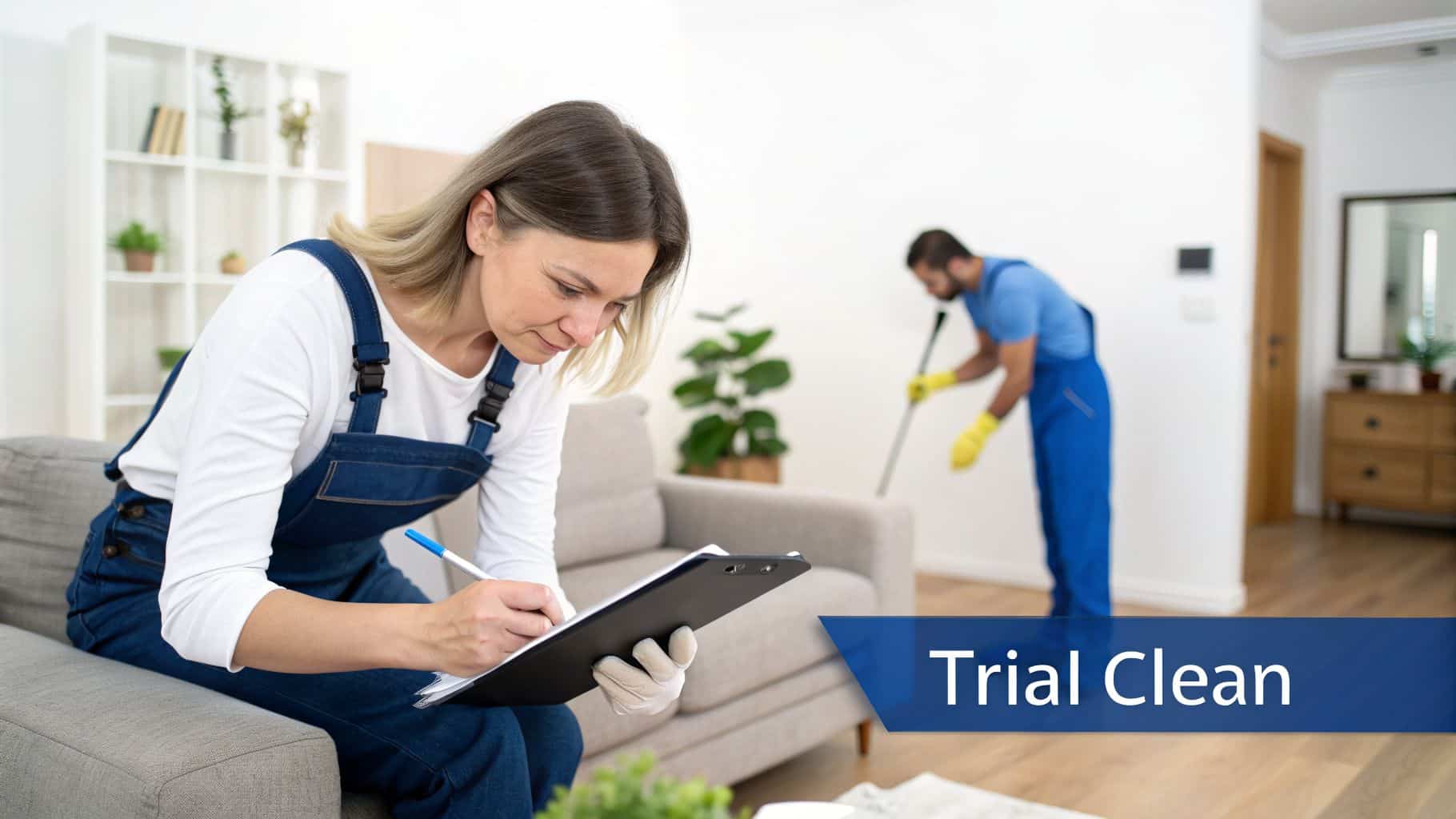
Finding a cleaner you’ve properly vetted is a great start, but it’s not the end goal. The real win is building a lasting professional relationship that saves you time and stress for years to come.
This is where a paid trial clean becomes one of the most important steps. It’s a low-commitment way for you and the cleaner to see if you’re a good fit. Think of it less as an audition and more as a real-world test of your working dynamic. You see their quality first-hand, and they get to grips with your home’s quirks.
Making the Trial a Success
To get the most out of a trial, clear communication is everything. Don’t leave your cleaner guessing what’s important to you. A bit of guidance up front helps them deliver the results you’re after and sets a positive tone from day one.
Before they arrive, have your priorities straight. Your best tool here is the checklist you prepared earlier—leave it somewhere obvious, like on the kitchen counter. This acts as a clear guide and shows you’ve thought the process through.
A few practical tips for a smooth trial:
Be Specific with Instructions: Point out any delicate surfaces, which products you prefer (if you’re supplying them), or any pet peeves, like limescale on taps or dust on skirting boards.
Give Them Space to Work: Once you’ve covered the essentials, let them get on with it. A professional works best without feeling like they’re being watched.
Offer Constructive Feedback: When they’re done, try to review the work together. Frame feedback positively. “The kitchen looks fantastic! Next time, could we spend a little more time on the skirting boards in the hall?” works far better than just pointing out faults.
Remember, the trial is as much for them as it is for you. A professional cleaner is also assessing whether they can meet your expectations and if the job feels like a good fit for their business.
A successful trial clean is built on mutual respect. By providing clear instructions and constructive feedback, you’re not just hiring a service; you’re starting a partnership with a skilled professional.
Formalising the Arrangement
Once you’re happy with the trial and ready to make it a regular thing, it’s smart to formalise the arrangement. This doesn’t mean a stuffy, complicated legal contract. A simple written agreement protects both of you by making sure the expectations are crystal clear from the start.
This simple step is what prevents future misunderstandings and is essential when you find a trustworthy cleaner you want to keep long-term.
What to Include in Your Agreement
Think of this as a straightforward summary of your shared understanding. Keep it simple and easy to refer back to. You can sort this out over email or in a simple document.
Your agreement should cover these key points:
Schedule: The day and time of the regular clean (e.g., every Tuesday, 9 am to 11 am).
Tasks: Attach the agreed-upon checklist of regular duties for each visit.
Payment: Specify the hourly rate or fixed price, how you’ll pay (e.g., bank transfer), and when payment is due (e.g., on the day of service or within 24 hours).
Cancellation Policy: Agree on a fair notice period for cancellations from either side. A 48-hour notice is a common and respectful standard.
Access Arrangements: Detail how the cleaner will get in if you’re not home, such as arrangements for a key or a lockbox code.
Putting this in writing creates a professional foundation built on clarity. It’s a small bit of admin that makes all the difference between a short-term hire and a fantastic partnership that makes life easier for years.
Your Questions About Hiring a Cleaner Answered
Even when you’ve found a few cleaners who look promising, it’s normal to have a few lingering questions. Deciding to let someone into your home or business is a big step, and you deserve to have all the facts straight. Let’s tackle some of the most common queries we see from people looking for a trustworthy professional.
How Much Should I Expect to Pay for a Cleaner in the UK?
This is the big question, isn’t it? In the UK, rates for a standard domestic clean usually fall somewhere between £14 and £20 per hour. As you might expect, cleaners in London and the South East often charge towards the top end of that scale.
For more intensive jobs, like a proper deep clean or a detailed end-of-tenancy clean, you’ll likely get a fixed price for the whole job instead of an hourly rate.
A quick tip: always ask if the price includes cleaning supplies. Some cleaners bring their own, while others expect you to provide them, and that can change the overall cost. Using a directory like Cleaner Connect makes it easy to compare local rates and find a quality service that fits what you’re looking to spend.
Do I Need to Be Home When the Cleaner Is Working?
This really comes down to what you’re comfortable with and the level of trust you’ve built with your cleaner. Lots of people like to be there for the first clean or two to show the cleaner around, point out any priority areas, and get to know them a bit.
Once you’ve found someone you click with, it’s incredibly common to give them a key or sort out another way for them to get in. This is exactly why finding someone you genuinely trust is so vital. Choosing a professional who has passed an ID check on a platform like Cleaner Connect gives you that extra layer of confidence, making it a much easier decision to have your home cleaned while you’re out.
What Is the Difference Between a Domestic Clean and a Deep Clean?
A regular domestic clean is all about maintenance. It covers the core tasks that keep your home looking and feeling fresh week to week.
Domestic Clean: This usually means dusting surfaces, vacuuming, mopping floors, cleaning bathrooms (sinks, toilets, showers), and wiping down kitchen worktops.
Deep Clean: This includes everything from a standard clean but goes much, much further. It tackles the jobs you do less often, like cleaning inside the oven, washing down skirting boards, cleaning interior windows, and getting into all those nooks and crannies behind furniture.
An end-of-tenancy clean is a specific type of deep clean, usually following a strict checklist from a letting agency to get a property ready for its next occupants.
What Happens If a Cleaner Accidentally Breaks Something?
While accidents are rare, they can happen. This is precisely why you should only ever hire a cleaner who holds Public Liability Insurance. It’s an absolute must. This insurance is there to cover the cost of accidental damage to your property, from a smashed vase to something more serious.
If you hire someone without it, you could find yourself footing the bill for repairs or replacements. When you search on Cleaner Connect, one of the first things to look for is the ‘Insurance Verified’ badge on a cleaner’s profile. This confirms they’ve shown us proof of their policy, giving you crucial financial protection. For more answers to common queries, you might find our full Cleaner Connect FAQs page helpful.
Ready to find your perfect professional? With Cleaner Connect UK Ltd, you can browse profiles of verified, insured, and ID-checked local cleaners today. It’s free for clients to search and connect.
Find your trusted local cleaner at https://cleanerconnect.co.uk.