You clear the kitchen before bed, wake up, and the house already feels behind. Breakfast dishes stack up, the hallway collects shoes and bags, and one missed wipe turns into a longer job by the end of the week. If you manage a rental, host guests, or clean professionally, that pattern costs more than time. It affects standards, handover speed, and how much work a property really takes to keep presentable.
Time-saving cleaning starts with method, not effort alone. Homes that stay under control usually run on repeatable habits, the right tools, and a clear order of work. The same principle applies to cleaning businesses. A cleaner who works with a set routine, stocked kit, and organised schedule can serve more clients without rushing and still leave a better result.
That matters whether you want to keep your own place manageable or run jobs more efficiently for other people. Some tasks are easy to stay on top of yourself. Others make more sense to pass to a professional when the finish matters, the property is large, or the turnaround window is tight. Cleaner Connect helps you find local cleaning professionals through a UK directory with verified profiles, reviews, and clear service categories.
The habits in this guide do both jobs. They help homeowners reduce mess before it builds up, and they help cleaners standardise their service, protect margins, and create a stronger client experience. The same thinking shows up in other service businesses too. Good systems save small amounts of time again and again, which is the point made in this Wellington consultancy automation efficiency guide. Cleaning works the same way. Small gains, repeated daily, turn into hours saved.
1. The Two-Minute Rule and Task Batching
Small jobs turn into big cleaning sessions because people leave them sitting. A toothpaste splash on the mirror, crumbs on the worktop, shoes by the door, a bin that's nearly full. None of these takes long on its own, but together they create the feeling that the whole place needs hours of work.
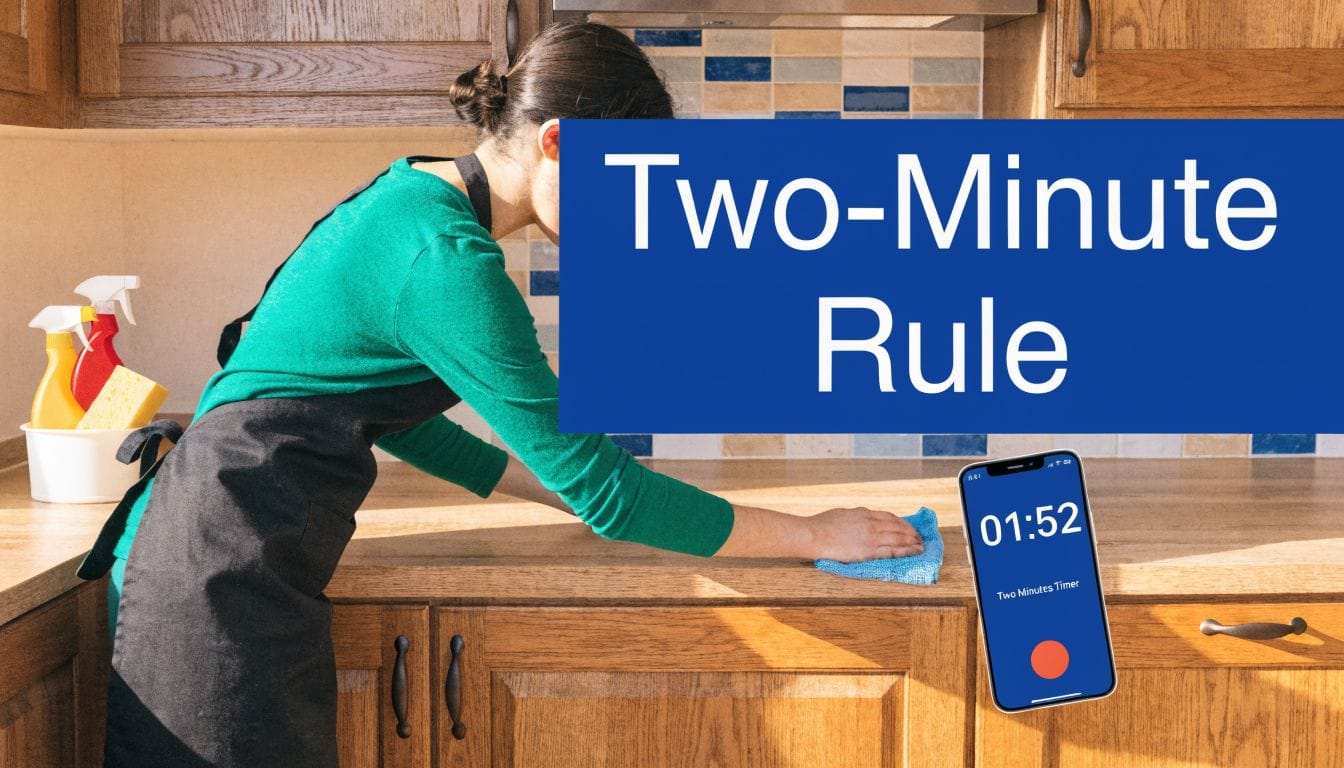
The two-minute rule fixes that. If a task takes about two minutes, do it straight away. Wipe the hob after cooking. Rinse the sink. Put the post in one place instead of three. This habit stops mess from hardening into a proper job.
On its own, that's useful. Paired with task batching, it's much stronger. Batching means doing similar tasks together in a set run, instead of bouncing around from room to room. Clean all mirrors in one go. Empty all bins in one pass. Dust every surface before you start floors.
Where batching saves time
Cleaners use batching because it cuts wasted movement. An end-of-tenancy cleaner who does all internal glass first, then kitchens, then bathrooms, then floors usually works faster than someone who finishes each room from top to bottom before moving on. Both methods can work, but batching often wins when speed matters.
A few examples:
- Airbnb turnarounds: Dust all bedroom surfaces first, then change all linens, then move to bathrooms.
- Domestic rounds: Tackle bathrooms consecutively while your cloths, products, and routine are already set.
- Office cleans: Clear bins and touchpoints in one pass before detailed desk and floor work.
Practical rule: Batch by tool or product, not just by room. Every time you switch kit, you lose time.
There's a wider efficiency point here too. Even outside cleaning, shaving seconds off repeated tasks adds up over a working week. The Wellington consultancy automation efficiency guide makes the same case in another context, and the principle holds: repeated friction wastes far more time than people think.
If you want these Time-Saving Cleaning Habits to stick, write them down. A short repeatable order beats good intentions every time.
2. The Declutter-First Method
If a surface is covered, you can't clean it properly. You can only clean around it.
That's why decluttering first is one of the most reliable Time-Saving Cleaning Habits. It sounds obvious, but it's the step people skip most often. They start spraying and wiping while moving chargers, letters, toys, mugs, and toiletries from one side to the other. The room feels active, but progress is slow.

For move-in and move-out jobs, this matters even more. A cleaner can deep clean more effectively when personal items are already boxed, shelves are clear, and worktops are emptied. The same goes for holiday lets between guests. The less visual clutter left behind, the faster a cleaner can reset the property to a consistent standard.
What works and what doesn't
What works is a quick sort before any product comes out:
- Keep: Put daily-use items back in their proper place.
- Remove: Box loose items that don't belong in the room.
- Decide later: Create one temporary container for undecided bits so they don't stall the clean.
What doesn't work is making cleaning wait for a full organising project. You don't need to colour-code every cupboard before you wipe a shelf. The point is access, not perfection.
For landlords and letting agents, a declutter-first approach also makes condition checks easier. You can see skirting, corners, stains, marks, and damage properly when the room isn't hidden under belongings. For cleaners, it's worth setting expectations before arrival. Ask for surfaces to be cleared where possible, especially in kitchens and bathrooms, because those rooms demand detail.
Clear space first. Cleaning gets faster when your cloth touches the actual surface, not the pile sitting on top of it.
If you're hiring help through Cleaner Connect, look for profiles that explain how they handle deep cleans, move-out work, or holiday let resets. A cleaner who communicates pre-clean prep clearly usually runs a tighter job on the day.
3. Microfibre and High-Quality Equipment Investment
Cheap kit often creates slow work. Cloths leave lint behind, vacuums lose suction, and weak brushes turn one bathroom into a longer job than it should be.
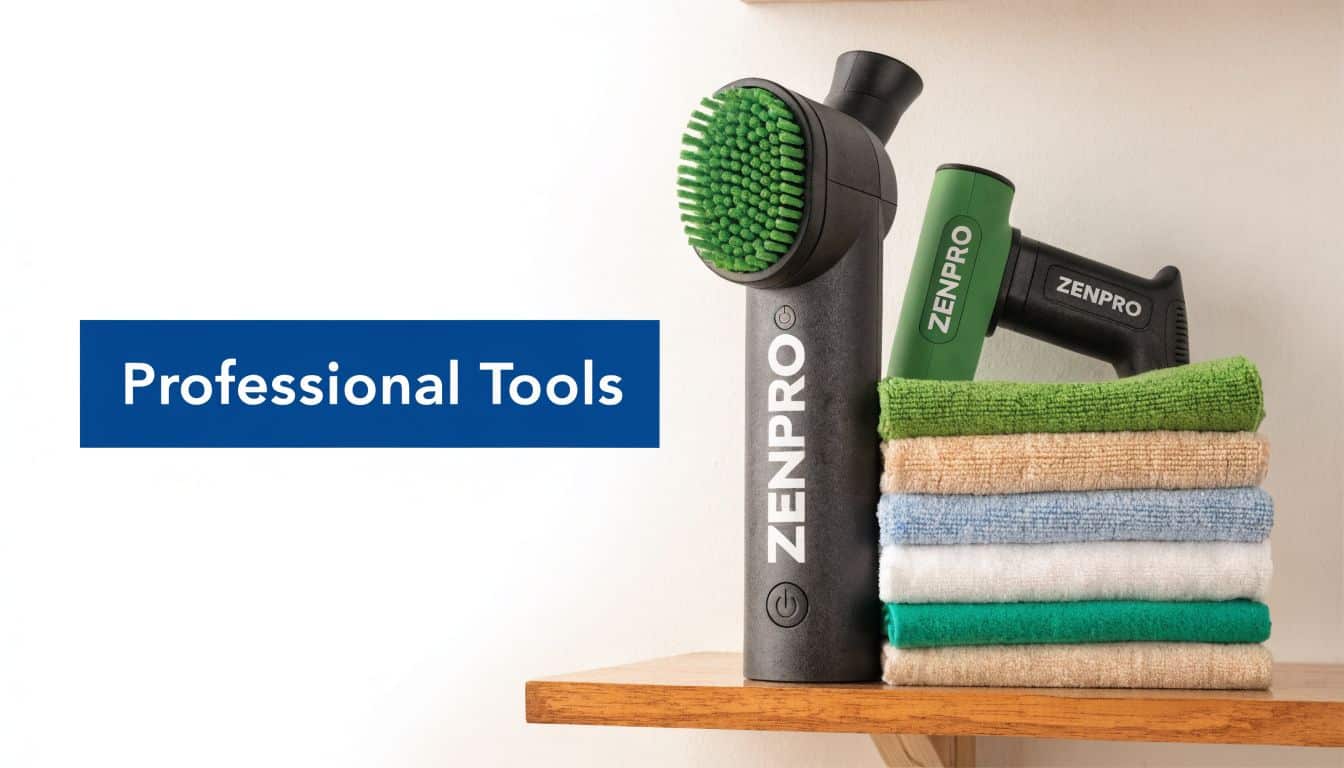
Microfibre is usually the first upgrade that pays back. It picks up dust and residue well, washes easily, and works across several room types if you separate cloths by task. Pair that with a mop that is quick to rinse and change, a vacuum with useful attachments, and brushes that reach into edges and corners, and you cut down wasted motion across the whole clean.
Spend on the tools you reach for every job
Buy for frequency first, not for looks or brand hype:
- Microfibre cloths: Use separate colours or sets for kitchens, bathrooms, glass, and general dusting.
- Vacuum attachments: Crevice and upholstery tools reduce bending, hand work, and missed edges.
- Extendable dusters: Useful for high shelves, curtain rails, vents, and wardrobe tops.
- Powered scrubbers: Best for grout lines, shower tracks, and bathroom build-up that slows manual scrubbing.
The right setup depends on the work. A homeowner may only need a small, reliable kit that is easy to store. A domestic cleaner needs tools that carry well between homes. End-of-tenancy teams often need tougher equipment that can handle heavier soil. Holiday let cleaners benefit from fast-reset kit that is easy to clean, pack, and reuse several times in one day.
If you're replacing worn tools or building a better kit, Cleaner Connect's cleaning suppliers directory helps you find suppliers that match the type of work you do.
This matters on both sides of the booking. Property owners get a faster, more consistent clean when the cleaner arrives properly equipped. Professional cleaners protect their margins because better tools reduce repeat passes, cut fatigue, and help them finish to a higher standard without adding time. On Cleaner Connect, a verified profile that shows organised equipment, service type, and attention to method gives clients more confidence before they book.
Good tools still need good process. If the order of work is poor, expensive kit will not save the job. If your method is sound, better equipment saves time, reduces rework, and makes results easier to repeat.
4. The 10-Minute Tidy-Up Habit
You get home, drop your bag, and by bedtime the room already looks harder to manage than it did that morning. That buildup rarely comes from one big mess. It comes from small items left out, one after another, until a cleaner has to spend paid time resetting the room before any real cleaning starts.
A 10-minute tidy-up fixes that problem. It keeps the home functional between deeper cleans and makes each scheduled clean faster to deliver.
Tidying is a preparation habit. Cleaning is the removal of dust, grease, limescale, marks, and soil. If surfaces are buried under cups, cables, paperwork, toys, and laundry, the cleaner either works around them or charges time to move them. Neither option is efficient.
For homeowners, the benefit is straightforward. Ten minutes in the evening can protect an hour of your weekend.
For professional cleaners, the same habit improves job flow. Clients who reset rooms before the visit give you access to floors, worktops, sinks, and bathroom edges from the start. That means fewer interruptions, better timing, and a more consistent finish. It also helps avoid awkward conversations about whether a booking was for cleaning or general tidying.
A practical evening reset looks like this:
- Clear the main surfaces: Put mugs, post, chargers, remotes, and loose items back in their usual place.
- Reset the kitchen: Load the dishwasher or stack items neatly, clear crumbs, and leave the sink usable.
- Open the floors: Pick up laundry, shoes, bags, and children's things so vacuuming and mopping are not blocked.
- Sort the bathroom: Put toiletries away, hang towels properly, and remove anything from the floor.
This works especially well in busy family homes, shared houses, and smaller flats where clutter spreads fast. In holiday lets and rental properties, it also reduces the risk of a quick turnover turning into a catch-up job.
There is a trade-off. Daily resets are repetitive, and the result can feel minor because the space never reaches the dramatic before-and-after stage. That is exactly the point. You are preventing disorder from turning into extra labour.
If you book a cleaner weekly or fortnightly, this habit usually gets you better value from the visit. More of the appointment goes toward bathrooms, floors, kitchen detail, and finish work. Less of it goes toward picking up yesterday's clutter.
Cleaners can use this as part of client education as well. A short pre-visit note that asks clients to clear surfaces and floors can save time without sounding pushy. On Cleaner Connect, professionals who explain their process clearly in a verified profile often attract clients who understand the difference between maintenance, tidying, and full cleaning.
5. Cleaning Product Standardisation and Pre-Mixing
A slow clean often starts in the cupboard. You reach for one spray, realise it is half empty, grab another, then stop to check whether it is safe for the surface. In a home, that wastes minutes. In a cleaning business, it eats into every appointment and makes results harder to keep consistent.
A tighter setup works better. Keep a small set of products with clear jobs, then use them the same way every time. For many properties, that means an all-purpose cleaner, a bathroom cleaner, a glass cleaner, a floor product, and a degreaser. You may still need specialist items for stone, heavy limescale, ovens, or stain treatment, but they should be exceptions rather than the default kit.
Kitchens show the benefit quickly because they combine grease, food mess, splash marks, and high-touch surfaces in one room. A standard product set cuts hesitation and reduces the chance of using the wrong chemical on the wrong finish. It also makes stock control easier. You know what needs replacing, what runs low fastest, and what is just taking up space.
Pre-mixing helps too, if the manufacturer allows dilution and you label bottles properly. The gain is simple. Less measuring at the sink, fewer trips back to the supply area, and faster handoff between tasks. The risk is just as clear. If bottles are not labelled with contents and dilution, mistakes become more likely, especially across multiple staff or properties.
A practical system looks like this:
- Limit the core kit: Use a repeatable set for routine work.
- Label every bottle: Product name, dilution, and intended use should be obvious.
- Keep one caddy ready: Carry the same core products from room to room.
- Match cloths to areas: Use colours or labels to avoid cross-contamination.
- Store specialist chemicals separately: Keep them available, but out of the everyday rotation.
For homeowners, this removes guesswork and makes short cleaning sessions easier to start. For cleaners, it supports training, quoting, and quality control. If every member of the team uses the same core kit, you get more predictable timings and fewer avoidable errors.
There is a trade-off. Standardisation saves time on routine work, but it should not turn into a one-product-for-everything approach. Good cleaners know where speed helps and where a specialist product protects the surface, improves the finish, or prevents a callback.
Cleaner Connect professionals can turn this into a service advantage. A verified profile that explains your methods, product choices, and safety standards gives clients a clearer picture of how you work before they book.
6. Appointment Scheduling and Route Optimisation
Cleaning time isn't just what happens inside the property. It includes travel, parking, key collection, delays, and the dead space between appointments. That's why smart scheduling is one of the most important Time-Saving Cleaning Habits for cleaners and cleaning businesses.
A cleaner with a full day spread across distant postcodes can feel busy while losing hours to the road. A cleaner working a tighter patch often gets more done with less stress. The same applies to landlords, letting agents, and hosts booking multiple jobs. If you can line up cleaners in the same area and on sensible timings, everything runs smoother.
Build your day by area, not by chance
The practical approach is simple:
- Cluster by location: Group jobs in the same postcode or neighbouring areas.
- Match job type: Put similar cleans together so your setup stays consistent.
- Leave breathing room: Build a buffer for access issues, overruns, or traffic.
- Protect your peak slots: Use your best times for your most reliable regular work.
This is especially useful for domestic rounds, office cleans, and holiday let changeovers. A cleaner doing several homes close together can carry the same workflow through the day. An end-of-tenancy specialist may prefer fewer jobs but tighter geographic planning to avoid burnout and late arrivals.
For cleaners using Cleaner Connect, your profile should reflect this. Make your service area clear. If you focus on certain towns, neighbourhoods, or counties, say so. Clients usually prefer a cleaner who already works nearby, because local coverage often means quicker communication and more realistic availability.
If you're a client searching for help, use the directory to narrow by category and location before you start messaging. That saves time and usually leads to better matches than contacting people who work too far away or don't cover your type of job.
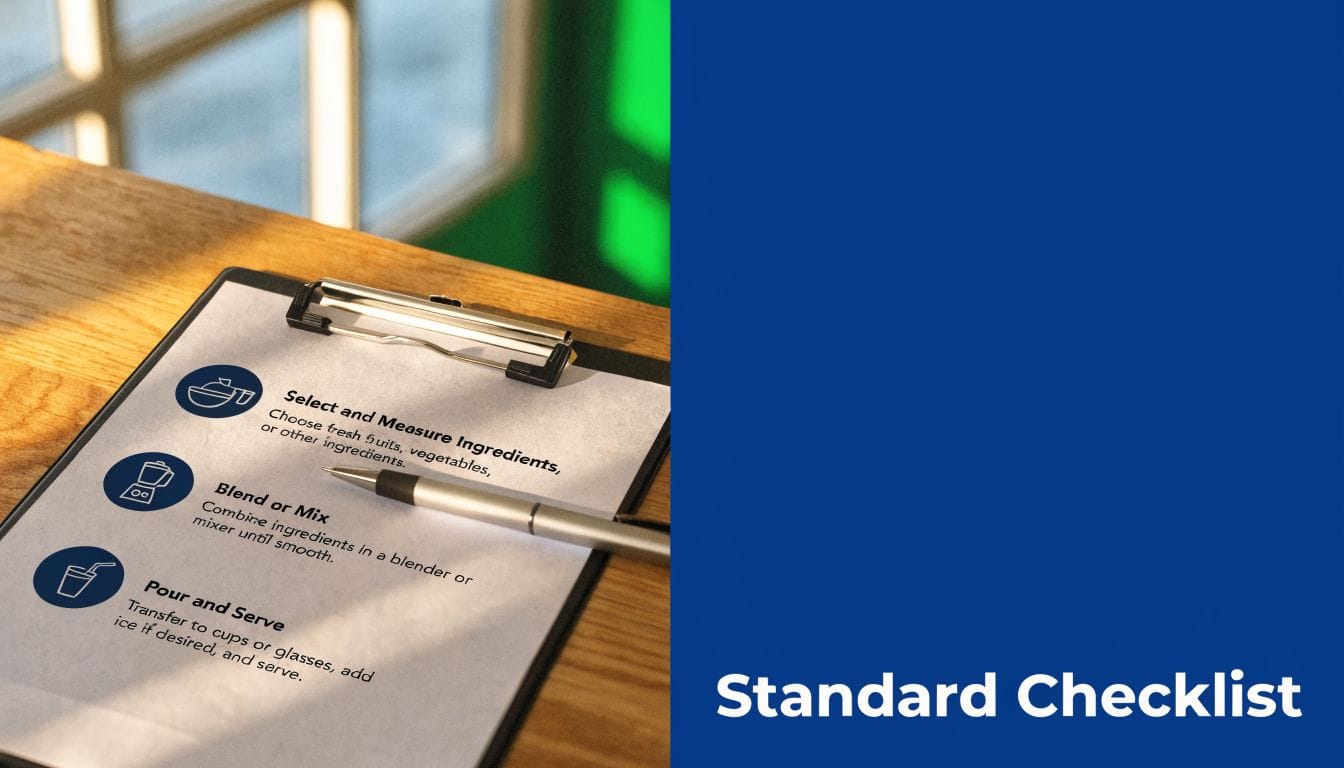
7. Checklists and Standard Operating Procedures
You finish a job, lock up, and then get the message. The client asks why the inside of the microwave was missed, or whether the spare room skirting boards were part of the clean. That usually comes down to one problem. The standard lived in someone's head instead of on paper.
Checklists fix that. They give you a clear sequence, reduce missed tasks, and make handovers easier when more than one person works on the property. For homeowners, landlords, and hosts, a checklist turns "please give it a good clean" into a clear scope. For cleaners, it protects time and reduces unpaid return visits.
A useful checklist does more than list rooms. It sets the standard for each room, records client-specific requests, and shows what counts as finished.
Useful sections often include:
- Kitchens: Worktops, cupboard fronts, sink, taps, splashbacks, appliance exteriors, inside microwave, floors
- Bathrooms: Toilet, basin, bath or shower, mirrors, taps, tiles, touchpoints, floors
- Living areas and bedrooms: Dusting points, skirting boards, mirrors, internal glass, floors
- Final checks: Bins emptied, odours checked, lights off, windows secured if required, keys returned
For deep cleaning work, Cleaner Connect's deep cleaning checklist guide is a handy reference point for setting expectations before the job starts. If you're pricing regular domestic work against one-off or higher-detail jobs, it also helps to compare scope against typical house cleaner costs in the UK, so the checklist matches the time allowed.
SOPs take this one step further. A checklist says what to do. A standard operating procedure says how to do it. That matters when you want consistent results across recurring visits, staff members, or subcontractors. In practice, an SOP can be simple. Which cloths are used in each room, what order the rooms are cleaned, when photos are taken, and what to report before leaving.
Write down preferences once. Use them every time.
That is where time savings build up. A homeowner no longer repeats the same instructions each visit. A cleaner no longer wastes minutes texting for clarification or fixing preventable misses. On Cleaner Connect, that kind of consistency strengthens your profile over time because clients remember reliable service, clear communication, and a standard that holds up from one booking to the next.
8. Outsourcing Specialised Services and Strategic Partnerships
A cleaner is halfway through a move-out job, the oven still needs attention, the carpets need extraction, and the checkout deadline is the same afternoon. That is the point where trying to do everything alone starts costing time and quality.
Specialist outsourcing works best when the task needs different equipment, extra training, or a separate pricing model. Oven cleaning, carpet cleaning, exterior window cleaning, upholstery work, and large laundry runs are common examples. For homeowners, this avoids paying one person to learn on your property. For cleaners, it protects your schedule and keeps your standard consistent.
The trade-off is coordination. You may have another booking window to manage, another invoice to track, or another contractor to brief. Even so, the time saved is often worth it when the alternative is slower work, inconsistent results, or a callback.
Cleaner Connect helps here if you use it with a clear plan. Build a small network of trusted specialists for the jobs you do not want to absorb into your core service. Check profiles for verification, service area, response speed, and evidence of the specific work you need. A domestic cleaner who can refer a reliable carpet technician keeps the client. A property owner who books the right specialist first avoids delays and repeat visits.
One practical setup is a move-out clean where the main cleaner handles the reset, surfaces, bathrooms, and final presentation, while a specialist takes the oven or carpets. That split usually produces a better result than stretching one booking to cover everything.
For clients comparing options, Cleaner Connect's guide to house cleaner costs helps you see how regular cleaning, deep cleaning, and specialist add-ons differ before you book. For cleaners, the same pricing context helps you decide whether to quote the whole job, subcontract part of it, or refer it out and protect your margin.
8-Point Comparison: Time-Saving Cleaning Habits
| Method | 🔄 Implementation complexity | ⚡ Resource requirements | 📊 Expected outcomes | 💡 Ideal use cases | ⭐ Effectiveness / quality |
|---|---|---|---|---|---|
| The Two-Minute Rule and Task Batching | Low–Medium (routine setup & sequencing) | Minimal (timers, checklist, organised supplies) | Fewer accumulated tasks, reduced movement/context-switching | Airbnb turnovers, regular domestic cleans, zone-based jobs | ⭐⭐⭐⭐ (improves efficiency & consistency) |
| The Declutter-First Method | Medium (client coordination & prep) | Moderate (time, disposal/logistics, possible third‑party services) | Large time savings for deep cleans; visible transformation | Move‑in/move‑out, end‑of‑tenancy, deep cleans | ⭐⭐⭐⭐⭐ (very high impact on cleaning speed) |
| Microfibre and High‑Quality Equipment Investment | Medium–High (capital + training + maintenance) | High (equipment purchase, storage, upkeep, training) | Faster jobs, higher quality, less chemical use, less fatigue | Deep cleaning, commercial contracts, premium/fast turnarounds | ⭐⭐⭐⭐⭐ (strong quality & efficiency gains) |
| The 10‑Minute Tidy‑Up Habit | Low (habit formation required) | Minimal (client time, simple checklist) | Maintains baseline cleanliness; reduces severity/frequency of deep cleans | Holiday lets, regular domestic schedules, office end‑of‑day routines | ⭐⭐⭐ (effective if consistently applied) |
| Cleaning Product Standardisation & Pre‑Mixing | Medium (testing, labelling, staff training) | Moderate (bulk supplies, bottles, storage) | Faster setup, consistent results, reduced waste & errors | Franchises, commercial fleets, multi‑property operations | ⭐⭐⭐⭐ (consistent, scalable results) |
| Appointment Scheduling & Route Optimisation | Medium (software + scheduling rules) | Moderate (routing tools, planning time, possible subscriptions) | More jobs/day, lower travel time/costs, better punctuality | Multi-job domestic days, clustered commercial contracts | ⭐⭐⭐⭐ (high impact on productivity) |
| Checklists and Standard Operating Procedures (SOPs) | High (creation and regular updates) | Moderate (documentation tools, training, QC) | Consistent quality, fewer misses, faster onboarding & estimates | Teams, commercial contracts, end‑of‑tenancy & deep cleans | ⭐⭐⭐⭐⭐ (critical for consistency at scale) |
| Outsourcing Specialised Services & Partnerships | Medium (partner vetting & agreements) | Low–Moderate (relationship management, referral tracking) | Access to specialist skills, reduced capital needs, broader offerings | Businesses avoiding specialist investment, holiday let managers | ⭐⭐⭐⭐ (depends on partner reliability) |
From Habits to Hired Help Your Next Steps
The best Time-Saving Cleaning Habits aren't glamorous. They're repeatable. That's why they work. A two-minute reset beats a delayed deep clean. Decluttering before you start beats cleaning around piles. Good tools beat cheap frustrations. Checklists beat memory. Local scheduling beats criss-crossing your day. And specialist support beats trying to force every job into one service.
For many, the ideal approach involves a blend of self-maintenance and occasional professional assistance. You maintain stability through brief habits that prevent clutter from accumulating. Then, when a task requires more time, greater detail, or specialized equipment than you can provide, you hire the appropriate cleaner. That strategy is frequently the quickest way to ensure a home or property remains manageable.
That balance makes sense in the UK, where cleaning tends to centre on manageable routines rather than long marathon sessions, as noted earlier. It also fits real life. Many households don't need to scrub everything all the time. They need a system that keeps standards up without eating the week.
For clients, the time-saving move isn't only outsourcing the clean itself. It's cutting down the time spent searching, comparing, and second-guessing who to hire. Cleaner Connect is a UK directory where homeowners and businesses can search for cleaning professionals by category and location, view verified profiles, check reviews, and message providers directly. If you need domestic cleaning, deep cleaning, end-of-tenancy work, oven cleaning, carpet cleaning, window cleaning, outdoor cleaning, holiday let support, or commercial services, using a directory with clear vetting signals can reduce a lot of friction.
For cleaning professionals, these same habits are business habits. Better batching, better route planning, cleaner product systems, and stronger checklists help you work faster and present yourself more professionally. A verified Cleaner Connect profile gives you a way to show that clearly to clients who are already looking for your service type and area. If you're weighing up DIY against specialist help for exterior glass in particular, this window cleaning guide from Cultivate House Detailing is a useful read on where professional input can make more sense.
Effective cleaning is not about achieving a perfect house. It is about creating a cleaner space that requires less effort to maintain, resulting in less stress, fewer rushed jobs, and better support when you need it.
If you want to spend less time searching and more time getting the right cleaning help, explore Cleaner Connect UK Ltd. Homeowners, tenants, landlords, hosts, and businesses can search for local cleaning professionals by service and area, while cleaners can create a verified profile to showcase their services and attract new enquiries.