
What if your daily cleaning routine is actually leaving 40% of the hidden grease and bacteria behind? You put in the work, but that stubborn oven grime won’t budge and limescale continues to dull your chrome taps. It’s frustrating to finish a scrub and still feel like the room is lacking that professional edge. As the UK’s #1 source for expert advice, we know that surface-level wiping isn’t enough to maintain a truly healthy home. That’s why we created The Ultimate Kitchen Deep Clean Guide to help you reclaim your space and achieve a standard of cleanliness that lasts.
Stop fighting the grease and start using a professional system that delivers real results. This framework provides the exact steps you need to master expert degreasing and sanitisation. By following The Ultimate Kitchen Deep Clean Guide, you’ll gain a clear plan of action to tackle every difficult corner, from extractor fan filters to hidden sink plumbing. We’ll help you unlock a food-safe space and show you how to identify when it’s more efficient to hire a verified professional through our online cleaning directory. Let’s transform your home and accelerate your cleaning standards today.
Key Takeaways
- Identify the high-traffic “bio-hazard” zones in your home and equip yourself with the professional-grade tools required to tackle stubborn carbon and bacteria.
- Implement the “Top-to-Bottom, Clockwise” framework to ensure hidden areas like kickboards and cupboard tops receive a thorough, elite-level finish.
- Master the chemistry of degreasing to eliminate grime that hot water alone cannot touch, focusing on high-risk sanitisation areas like sinks and cutting boards.
- Follow The Ultimate Kitchen Deep Clean Guide checklist to systematically transform your kitchen from a greasy workspace into a pristine, professional environment.
- Learn when to accelerate your results by hiring a verified expert from our online cleaning directory to handle even the toughest domestic challenges with ease.
Table of Contents
Why Your Kitchen Needs a Deep Clean (and the Tools to Tackle It)
The Systematic Approach: Deep Cleaning Appliances and Cupboards
Why Your Kitchen Needs a Deep Clean (and the Tools to Tackle It)
Stop settling for surface-level shines. A true deep clean is a surgical strike against accumulated grease, carbon deposits, and hidden bacteria. In the average British home, the kitchen is the highest-traffic zone. It’s where we prep meals and gather, but it’s also a primary bio-hazard area if neglected. Daily wipes only go so far. Over time, a 2mm layer of atomised cooking oil and dust creates a sticky film on top of cupboards and extractor fans. This isn’t just unsightly; it’s a breeding ground for pathogens. This is The Ultimate Kitchen Deep Clean Guide designed to help you reclaim the heart of your home through systematic, high-impact action.
The difference between maintenance and a quarterly professional-standard clean is the level of detail. While daily chores focus on visibility, a deep clean focuses on hygiene and longevity. Following strict food safety principles prevents cross-contamination and keeps your family protected from foodborne illnesses. We are shifting the narrative from the daily grind of manual labour to the excitement of total home transformation. Professional cleaners across the UK use these exact systems to deliver results that wow. Whether you are a homeowner or a pro looking to scale your reputation on an online cleaning directory, mastering these steps is essential.
The Essential Deep Cleaning Kit
Efficiency starts with the right kit. You need a minimum of 10 high-quality microfibre cloths to avoid spreading grease between surfaces. Grab non-scratch scourers for delicate hobs and a sturdy grout brush for those neglected tile lines. Your chemical arsenal must include the "Big Three": a powerful alkaline degreaser for carbon buildup, a lactic acid descaler for the sink, and a food-safe sanitiser for the final touch. Safety is your priority. Wear heavy-duty rubber gloves to protect your skin and ensure maximum ventilation. Always check surface compatibility before applying strong chemicals to natural stone or bespoke cabinetry.
Organise Your Space for Success
Clear the decks immediately. You cannot clean what you cannot see. Clearing worktops is the non-negotiable first step for any professional-grade clean. Move the toaster, kettle, and spice racks to a designated "staging area" in a separate room. This blank canvas allows you to reach every corner without obstruction. Ensure your bins are empty and the sink is completely clear before you begin the process. This creates a streamlined workflow that prevents bottlenecks. By following The Ultimate Kitchen Deep Clean Guide, you eliminate the clutter that slows you down. You aren’t just cleaning; you are implementing a system that guarantees a flawless finish every single time.
Ready to take your cleaning to the next level? If you are a professional cleaner looking to grow your business and connect with more customers, join our community. Sign up to create your verified profile on Cleaner Connect today and start building the business you deserve.
The Systematic Approach: Deep Cleaning Appliances and Cupboards
Professional cleaning isn’t just about scrubbing harder; it’s about working smarter. To master The Ultimate Kitchen Deep Clean Guide, you must adopt the "Top-to-Bottom, Clockwise" rule. This system ensures you never contaminate a surface you’ve already cleaned. Start at the highest point, usually the tops of wall-mounted cupboards, and move around the room in a consistent circle. This logical flow prevents you from wasting time and guarantees a consistent result every time.
Elite cleaners focus on the hidden zones that regular weekly maintenance ignores. This includes the kickboards beneath base units and the thick layer of dust that settles on top of tall larders. You also need to master the dwell time principle. This is the period a cleaning agent sits on a surface to break down grime. Instead of scrubbing immediately, let the chemicals do the heavy lifting for 15 to 20 minutes. This approach saves your energy and protects delicate surfaces from abrasive damage.
Mastering the Oven and Hob
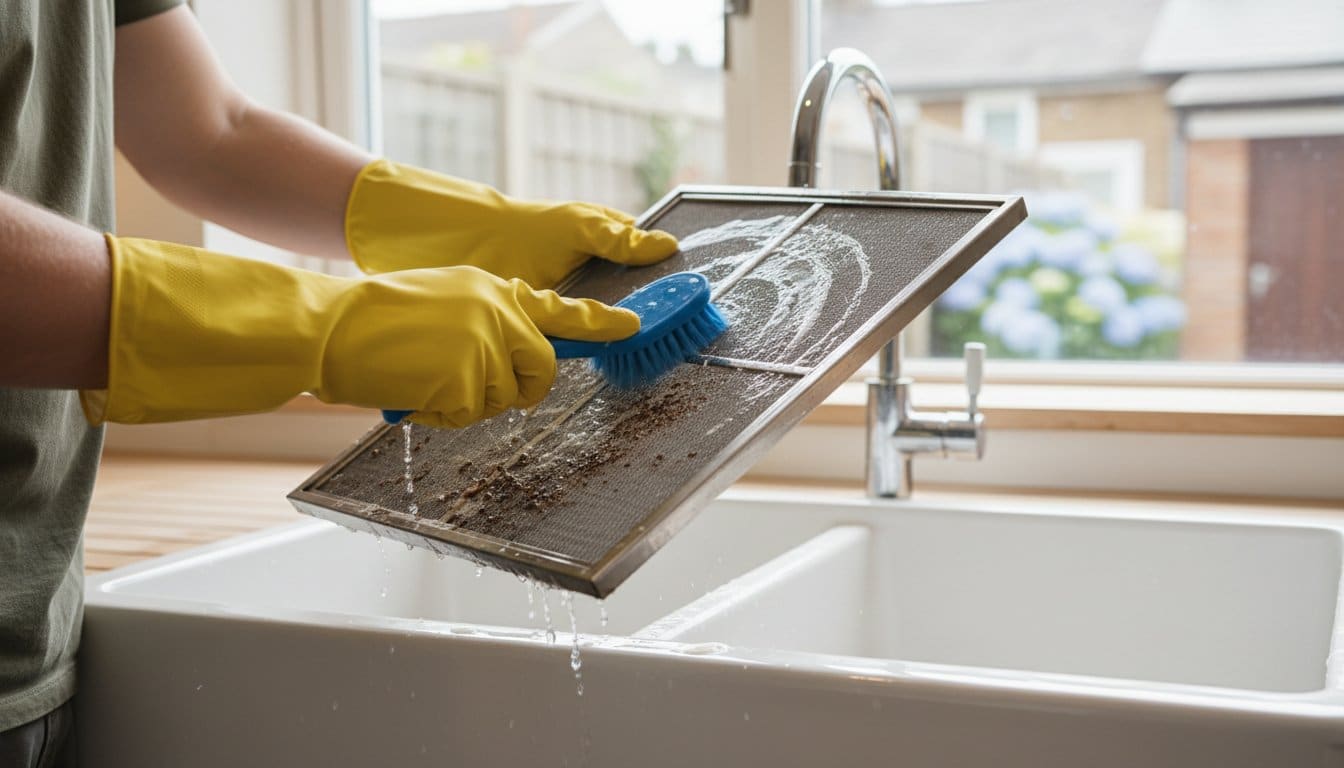
Tackling burnt-on carbon requires patience and precision. Apply a heavy-duty alkaline cleaner to the oven interior and let it dwell for at least 45 minutes. While the chemical works, soak your extractor fan filters in hot, soapy water. Clogged filters are a primary cause of kitchen odours and significantly increase fire risks. The Home Office reported that cooking appliances caused 45% of accidental dwelling fires in the UK in 2023. Ensure you follow Food Standards Agency hygiene standards by sanitising the oven glass seal and control knobs. These areas often harbour bacteria from raw food handling that can survive for several days.
Fridge and Dishwasher Revival
A deep clean isn’t complete without addressing appliance efficiency. Inspect fridge door seals for black mould using a soft toothbrush and a mild bleach solution. A clean seal ensures an airtight fit, which can reduce energy consumption by up to 10% on older models. For the dishwasher, remove the bottom filter and clear any trapped debris. Run a descaling cycle at 60°C to remove limescale buildup that affects the heating element. If stubborn odours persist, place a small bowl of bicarbonate of soda inside the fridge for 24 hours to neutralise acidic smells naturally.
Cupboards, Drawers, and Pantries
Use the "Empty, Sort, Wipe" method to transform storage spaces like a pro. Remove every item from the cupboard to reveal hidden spills. Dispose of out-of-date stock and wipe the interior with a food-safe sanitiser. Wall-mounted units often develop a grease film on their top surfaces. This sticky layer traps dust and allergens, making it difficult to remove with standard sprays. Use a concentrated degreaser to strip this back to the original finish. Finally, focus on high-traffic touchpoints. Sanitising handles and drawer pulls is vital for eliminating cross-contamination risks in any busy household.
If you’re looking to scale your business and spend more time working on your strategy rather than on your tools, consider joining our online cleaning directory. Verified profiles help you build trust with local clients instantly. This strategy is a core part of The Ultimate Kitchen Deep Clean Guide for any professional looking to dominate their local market and increase their profitability.
Mastering Tough Grime: Grease, Limescale, and Bacteria
Stop fighting a losing battle with a bucket of lukewarm water and a prayer. Chemistry dictates that grease is a lipid, meaning it is naturally hydrophobic. It repels water. If you try to tackle a greasy extractor fan with just hot water, you aren’t cleaning; you’re just moving the mess around. To win this war, you must understand emulsification. You need surfactants that wrap around grease molecules, lifting them from the surface so they can be rinsed away. This is a non-negotiable step in The Ultimate Kitchen Deep Clean Guide if you want professional results that last.
Bacteria don’t just sit on the floor. They thrive in the "hot zones" you touch every single day. Your kitchen sink often harbours more coliform bacteria than a toilet seat. Sponges are even worse, frequently acting as a breeding ground for E. coli and Salmonella. You should replace your sponge every week or switch to a silicone scrubber that you can disinfect in the dishwasher. For cutting boards, cross-contamination is the enemy. Use separate boards for raw meat and vegetables, and ensure you’re following high hygiene standards. For more detailed advice on maintaining a sanitary cooking space, BBC Good Food’s kitchen cleaning guide provides excellent benchmarks for home safety.
Hard water is a silent profit killer for cleaning businesses and a headache for homeowners. Over 60% of the UK, particularly in the South East and London, deals with hard water. This mineral build-up isn’t just an eyesore. Limescale creates a rough, porous surface that acts like a magnet for grease and bacteria. It traps dirt in a calcified cage that standard sprays won’t touch. You need to break the cycle. When choosing your weapons, follow this framework: use eco-friendly citric acid cleaners for light maintenance and daily shines. Switch to heavy-duty, alkaline-based commercial degreasers only when tackling carbonised grease or neglected rental properties. The Ultimate Kitchen Deep Clean Guide requires the right tool for the specific level of soilage.
The War on Kitchen Grease
Professional degreasing requires patience. Spray your backsplash and tiles, then walk away for at least 10 minutes. This dwell time allows the chemicals to penetrate the lipid layers. For those tight corners around the oven or hinges where grease turns into a sticky glue, use a steam cleaner. High-pressure steam at 100°C melts grease instantly without the need for harsh fumes. Degreasing is the chemical breakdown of lipids for easy removal. This method keeps your workspace chemical-free while ensuring every millimetre is sanitised.
Limescale Removal and Sink Restoration
Restore your sink to its former glory by matching the cleaner to the material. For stainless steel, use a lactic acid-based cleaner and always scrub with the grain to avoid micro-scratches. Ceramic sinks benefit from a mild bleaching agent to lift deep-seated stains. Don’t ignore the taps. Green build-up on aerators restricts flow and looks unprofessional. Soak the tap head in a bag of white vinegar for an hour to dissolve the calcium. If the job is too big for a DIY approach, there are local experts in Greater Manchester who specialise in hard-water restoration and professional kitchen recovery. They have the industrial-strength equipment to scale your results quickly.
Ready to turn these professional tips into a profitable business? Stop being a solo operator stuck on the tools and start leading. If you want to dominate your local market, you need a profile that stands out. Sign up for our online cleaning directory today and get your business verified. It’s time to unlock more leads and transform your cleaning hustle into a high-growth company. Join Cleaner Connect now and start working on your business, not just in it.
Your Step-by-Step Kitchen Deep Cleaning Checklist
Stop guessing and start executing. A professional result requires a systematic approach that leaves no corner untouched. Use The Ultimate Kitchen Deep Clean Guide to transform your space from a grease trap into a pristine culinary sanctuary. Start at the highest point and work your way down to ensure gravity works with you, not against you. This method ensures that dislodged debris doesn’t ruin surfaces you’ve already polished.
High-Level Dusting: Attack ceiling corners and light fixtures first. Dust and cobwebs migrate downwards. Use a long-reach microfibre duster to clear the 15% of dust that usually settles above eye level, which is often missed in daily routines.
Degreasing the Engine Room: The extractor hood, hob, and splashback are grease magnets. Apply a professional-grade alkaline degreaser and let it dwell for five minutes. This breaks down carbonised oils, making them 40% easier to wipe away without scratching the stainless steel.
The Oven Overhaul: Remove the racks and soak them in a dedicated cleaning solution. Scrub the interior walls and the glass door until they sparkle. Removing burnt-on carbon can actually improve your oven’s heating efficiency by up to 10% and prevents smoke during cooking.
Small Appliance Detailing: Don’t just wipe the outside. Descale the kettle, empty the toaster crumb tray, and steam-clean the microwave interior. These daily-use items often harbour more bacteria than a toilet seat if left neglected for more than 14 days.
Surface Sanitisation: Scrub tile grout with a stiff brush and an oxygen-based cleaner. Once the grout is bright, sanitise all worktop surfaces using a food-safe disinfectant to eliminate 99.9% of pathogens. This is the core of The Ultimate Kitchen Deep Clean Guide philosophy.
The Final Flourish: Floors and Skirting
Gravity is your enemy during a deep clean. Every bit of dust you dislodge from the cupboards eventually lands on the floor. That’s why the floor must be the absolute last thing you touch. Use a dedicated floor degreaser on kitchen tiles to avoid that sticky, slippery residue that standard mops often leave behind. Finish by hand-wiping the skirting boards. It’s a small detail, but it’s the professional touch that defines a true deep clean. Following The Ultimate Kitchen Deep Clean Guide means attention to detail is your top priority.
Professional Maintenance Habits
Adopt the "clean-as-you-go" philosophy to reclaim your weekends. If you wipe the hob immediately after cooking, you’ll never need a six-hour scrubbing session again. Schedule weekly micro-deep cleans for high-grease areas like the extractor filters. This proactive approach keeps your kitchen in showroom condition year-round. When your schedule is packed, finding a reliable partner through an online cleaning directory saves you money and stress long-term. Regular maintenance prevents the permanent damage that heavy grease buildup causes to expensive appliances. The Ultimate Kitchen Deep Clean Guide is about working smarter, not harder.
Ready to take your home to the next level? Find a verified professional today and experience the difference of a true deep clean.
Elevate Your Standards: Hire a Pro or Grow Your Business
You have reached the end of The Ultimate Kitchen Deep Clean Guide, but your journey to a spotless home doesn’t have to be a solo mission. There comes a point where a kitchen is simply too far gone for a standard weekend scrub. If you are facing decades of carbonised grease on oven heating elements or limescale that has practically fused with your plumbing fixtures, it is time to call in the experts. Professional cleaners don’t just move dirt; they use industrial-grade steam cleaners at temperatures exceeding 120°C to sanitise surfaces and dissolve grime that domestic products cannot touch.
Hiring a professional through a trusted online cleaning directory ensures you aren’t just getting a surface wipe. These specialists follow rigorous protocols to deliver a result that lasts. They understand the science of pH-neutral cleaners for stone worktops and the precise agitation needed for stainless steel. By outsourcing this 15-hour task, you reclaim your weekend and ensure your kitchen meets the highest hygiene standards. Many specialists actually use the frameworks found in The Ultimate Kitchen Deep Clean Guide to build their own internal checklists, ensuring they never miss a single hinge or filter.
Find Your Perfect Local Cleaner
Finding a reliable partner shouldn’t be a gamble. Use our online cleaning directory to filter for deep-clean specialists who have the right kit for the job. You can narrow your search by specific expertise, ensuring you find someone who handles high-end appliances with care. Trust is everything in this industry. Always read verified reviews from local homeowners to confirm the quality of work before you book. Our network provides comprehensive coverage across the entire UK. Whether you are looking for a specialist in Lancashire or a high-end team in London, we connect you with professionals who take pride in their craft.
Are You a Professional Cleaner?
If you are already delivering these high standards, it is time to grow your cleaning business and stop competing on price alone. High-quality leads are the lifeblood of any successful company. By showcasing your deep-cleaning expertise on a verified profile, you position yourself as the go-to authority in your area. This allows you to scale your operations and move away from the daily grind of manual labour. A verified profile on the UK’s leading online cleaning directory builds instant rapport with premium clients who value quality over the lowest quote. Don’t let your business plateau. Join Cleaner Connect today and start connecting with local customers who need your specific skills to transform their homes.
Whether you are a homeowner seeking a fresh start or a business owner ready to dominate your local market, the solution is about connection. A deep clean is more than a chore; it is an investment in your property and your health. Take the next step toward a professional standard today. Use the tools available to ensure your kitchen remains the heart of your home, maintained by the best in the business.
Take Control of Your Kitchen Hygiene Today
You now have the professional framework to transform your home using The Ultimate Kitchen Deep Clean Guide. Mastering stubborn grease and limescale doesn’t have to be a daunting chore when you follow a systematic approach. By prioritising high-touch zones and deep-cleaning appliances, you ensure a healthier environment for your family while extending the life of your equipment.
Sometimes the best way to achieve a five-star finish is to bring in the experts. Cleaner Connect is a dedicated online cleaning directory that makes finding help simple and safe. You’ll benefit from verified reviews from real UK customers and a secure messaging system to discuss your requirements directly. We provide national coverage with local expertise, ensuring you get professional results without the stress. Don’t spend your weekend scrubbing cupboards when a specialist can unlock a higher standard of cleanliness for you.
Find a trusted local cleaner for your kitchen deep clean today and enjoy the pride of a truly spotless home.
Frequently Asked Questions
What is included in a professional kitchen deep clean?
A professional kitchen deep clean covers every square inch of the space, including degreasing extractors, scrubbing behind heavy appliances, and sanitising all internal cupboards. It goes far beyond surface wiping to eliminate carbon deposits from ovens and limescale from taps. This service follows the standards found in The Ultimate Kitchen Deep Clean Guide to ensure 100% hygiene compliance. It’s a complete transformation that turns a greasy workspace into a high-performance environment.
How long does it take to deep clean a standard kitchen?
A standard kitchen deep clean typically takes between 4 and 6 hours to complete depending on the size and condition. If you’re managing a larger commercial space, expect the process to take 8 hours or more. Efficiency is key; professional cleaners use structured systems to accelerate the workflow without cutting corners. This time investment ensures every grease trap and hidden corner meets professional standards before the job is signed off.
How often should I deep clean my kitchen to maintain hygiene?
Deep clean your kitchen every 3 to 6 months to maintain a safe and hygienic environment. High-traffic households or commercial kitchens should aim for quarterly cleans to prevent grease build-up and pest risks. Frequent maintenance protects your appliances and extends their lifespan. Use The Ultimate Kitchen Deep Clean Guide to track your progress and ensure you’re hitting every milestone required for a spotless home or business.
Can I deep clean my oven without using harsh chemicals?
You can clean your oven using a paste made from 150g of bicarbonate of soda and 60ml of water. Apply the mixture to the interior surfaces, let it sit for 12 hours, then wipe it away with a damp cloth and a splash of white vinegar. This natural method effectively breaks down burnt-on food without the fumes associated with caustic cleaners. It’s a safer choice for families and eco-conscious business owners alike.
What is the best way to remove thick grease from kitchen cabinets?
The best way to remove thick grease is using a concentrated degreaser or a mixture of 2 parts warm water to 1 part dish soap. Apply the solution with a microfibre cloth, working in circular motions to lift the residue without damaging the finish. For stubborn 2mm thick grease layers, a professional-grade citrus cleaner works wonders. Following The Ultimate Kitchen Deep Clean Guide ensures you don’t miss these hidden spots during your routine.
Is it worth hiring a professional for a kitchen deep clean?
Hiring a professional is definitely worth it because it saves you roughly 6 hours of intensive manual labour and ensures a superior finish. Pros bring specialised equipment and industrial-strength products that deliver results you can’t achieve with supermarket sprays. It allows you to focus on working on your business, not in it, while experts handle the grit. Use an online cleaning directory like Cleaner Connect to find verified, high-rated professionals in your area.
How much does a kitchen deep clean cost in the UK?
A professional kitchen deep clean in the UK typically costs between £150 and £350 for a standard domestic property. Prices vary based on your location and the specific appliances included, such as AGAs or double ovens. Commercial kitchens are quoted differently, often starting from £500 for a full sanitisation. The Ultimate Kitchen Deep Clean Guide highlights that professional results are essential for maintaining high hygiene ratings and protecting your property value.
What should I do to prepare for a professional cleaner?
Prepare for your cleaner by clearing all items from the worktops and emptying the sink of any dishes. Remove magnets from the fridge and clear out any cupboards that require internal cleaning to give the team instant access. This preparation allows the pros to start immediately, maximising their time on the tools. For a full checklist, consult The Ultimate Kitchen Deep Clean Guide to ensure your home is ready for a professional transformation.
Ready to scale your cleaning business and dominate your local market? Join the UK’s #1 online cleaning directory today. Sign up to Cleaner Connect to get your profile verified, unlock consistent leads, and start growing your profitability right now.