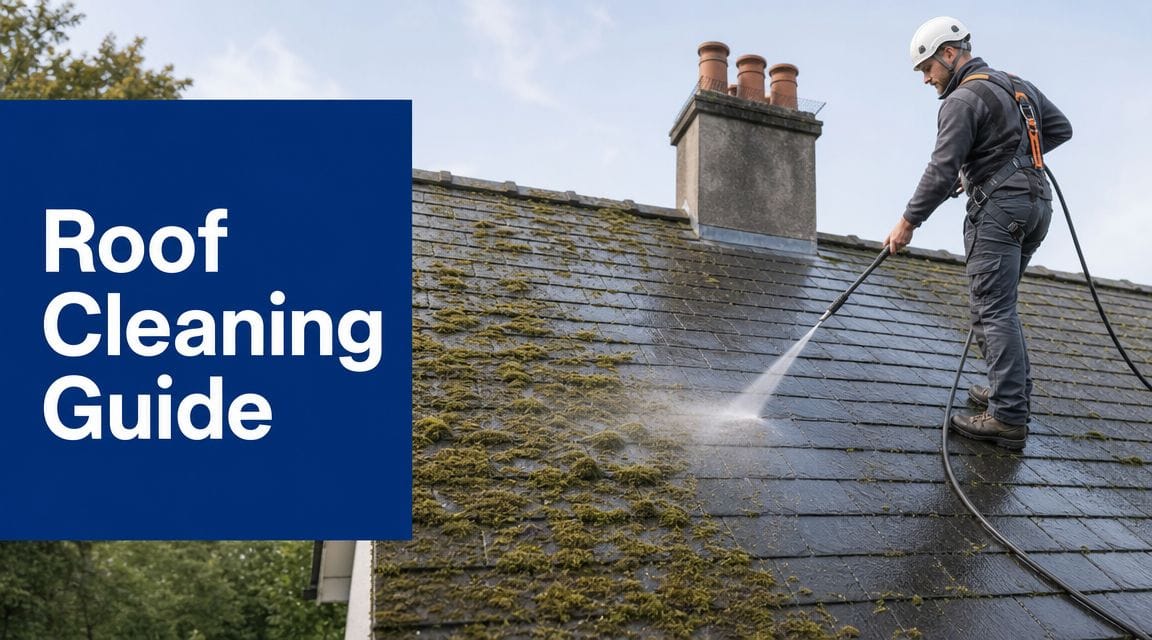
You've looked up and noticed the roof isn't just a bit discoloured anymore. There's moss thickening around the edges, dark streaks across the tiles, and maybe a few clumps dropping into the gutter after rain. That's usually the point where people start searching for roof cleaning services and run straight into mixed advice, vague promises, and wildly different quotes.
A roof clean can help protect the surface, reduce blocked gutters, and improve the look of the property. But the wrong method can do the opposite. Too much pressure, poor access control, no runoff plan, or an uninsured operator can turn a maintenance job into an expensive repair.
That matters because roof cleaning sits inside a much larger UK exterior maintenance market. The UK's building exterior cleaning industry, including roof cleaning, was valued at about £1.2 billion in 2024, which shows that property upkeep is treated as routine maintenance rather than an unusual spend in our climate, according to UK exterior cleaning market reporting.
Your Guide to Professional Roof Cleaning
Homeowners typically don't start looking at roof cleaning services because they're thinking about kerb appeal. They start because something looks wrong. Moss is getting heavier, gutters are overflowing with debris, or one side of the roof never seems to dry out.
That instinct is usually right. Organic growth on a roof isn't always an emergency, but it should never be dismissed without a proper look. Moss holds moisture, drops debris into gutters, and can interfere with drainage around overlaps, valleys, and edges. Algae and lichen are often more about appearance at first, but they still tell you the roof is staying damp for long periods.
Why the method matters
A roof isn't a driveway. It can't be treated like one.
The surface may be concrete tile, clay tile, slate, or another roofing material, and each one reacts differently to water pressure, foot traffic, and chemical treatment. Older roofs need even more care. Once surface coatings are stripped or water gets forced beneath the laps, you can create problems that weren't there before.
Practical rule: If a contractor talks more about “blasting it clean” than inspecting the roof, that's a warning sign.
What a safe decision looks like
Good roof cleaning services start with assessment, not equipment. A capable cleaner should look at:
- Roof type and condition
- Pitch and access around the property
- Level of moss, algae, or lichen
- Nearby gutters, downpipes, gardens, and drainage
- Whether cleaning is appropriate, or whether the roof mainly needs selective moss removal and maintenance
The safest hiring decision usually comes down to three things. The method has to suit the roof. The contractor has to be properly insured. The quote has to explain what's included, instead of hiding risk behind a low headline price.
Signs Your Roof Needs Cleaning and How Often
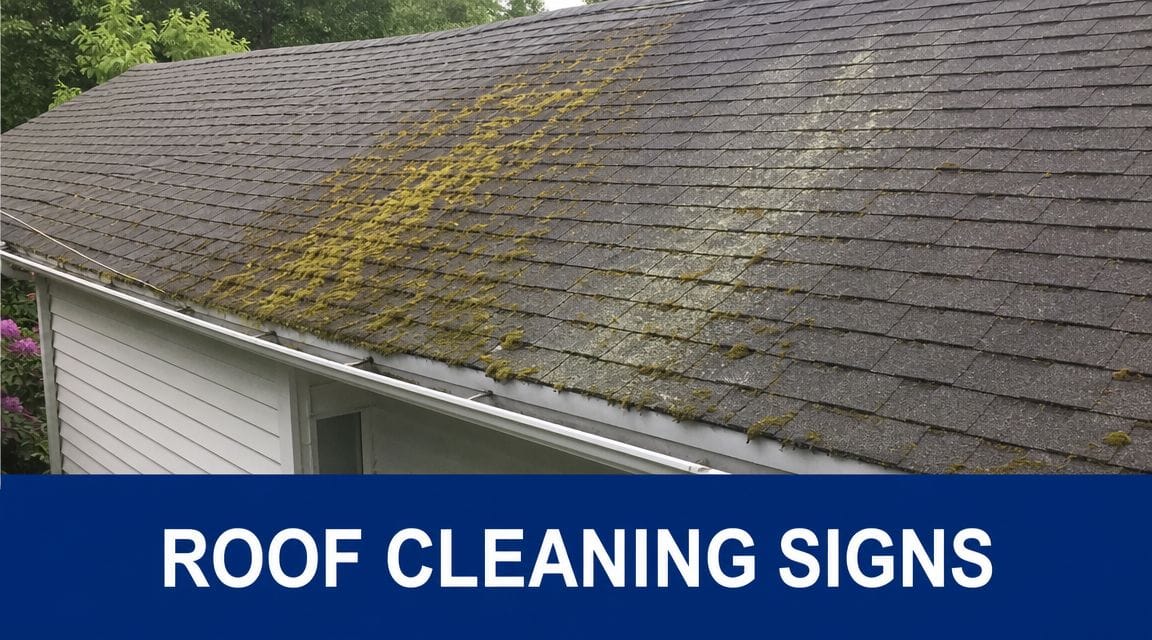
Some roofs need attention because they're visibly overloaded with moss. Others only show subtle warning signs. The important thing is knowing the difference between cosmetic staining and growth that starts affecting drainage and tile condition.
What to look for from ground level
You don't need to climb a ladder to spot the main issues. In many cases, the roof tells you enough from the ground.
- Heavy moss on tile edges: This is the clearest sign that moisture is lingering and debris will start moving into gutters.
- Dark streaks or green film: Often algae. It may be mainly aesthetic, but it also shows the roof stays damp.
- Lichen spots: These can bond tightly to the surface and are harder to remove than loose moss.
- Debris in gutters after rain: Roof growth rarely stays on the roof. It breaks off and causes blockages lower down.
- Areas that dry unevenly: North-facing or shaded sections often hold growth longer and may need different treatment timing.
A useful follow-on check is the state of your gutters. If the roof is shedding moss into the rainwater system, read this guide on the best time to clean your gutters because the two jobs often need planning together.
How often depends on exposure, not habit
There isn't a single cleaning timetable that suits every UK home. A sheltered property under trees in a damp area may need more frequent attention than a more exposed roof that gets good sun and airflow. Roof material matters too. So does age.
The weather makes that even more relevant. The UK Met Office reported that 2024 was the warmest year on record for the UK and notably wet in many areas, conditions that accelerate moss and algae growth on roofs, as referenced in this summary of weather effects on roof cleaning timing.
A roof that stays damp after everyone else's has dried is usually the roof that needs checking first.
When to act and when to leave it alone
Not every mark means you need full roof cleaning services right away. Sometimes the right job is limited moss removal, gutter clearing, and a check for slipped tiles or defective mortar. Sometimes a roof is too fragile for aggressive cleaning and should only have minimal intervention.
A sensible rule is this. If growth is thick enough to trap debris, interfere with runoff, or repeatedly clog gutters, it's worth getting inspected. If it's light staining only, the decision is more about appearance and material suitability than urgency.
Understanding Different Roof Cleaning Methods
The biggest mistake people make with roof cleaning services is assuming every method does the same job. It doesn't. The equipment, pressure level, and treatment sequence all change the outcome.
Some roofs can tolerate more direct cleaning than others. Many can't. On older UK homes, the safest result usually comes from a method that removes growth while protecting the tile surface and avoiding water ingress.
The three main approaches
High-pressure washing is a commonly recognized method. It's fast and visually dramatic, but that doesn't mean it's suitable. The wrong pressure can drive water under tiles, strip protective finishes, and disturb weak pointing or already-tired roof components.
Soft washing uses much lower pressure with cleaning solutions designed to break down organic growth. This is very different from “turning down” a pressure washer. UK specialist guidance states that true low-pressure soft washing should operate at 4 to 5 bar, around 60 to 70 PSI, while standard jet washers can still sit around 25 to 30 bar even when turned down, according to specialist low-pressure roof cleaning guidance.
Biocide treatment is often used after manual moss removal or as part of a soft wash process. Its role is to deal with residual organic matter and slow regrowth. It's not a magic shortcut on a heavily mossed roof. If the roof is loaded with thick debris, that material usually needs controlled removal first.
Roof cleaning methods compared
| Method | Best For | Risk Level | Key Benefit |
|---|---|---|---|
| High-pressure washing | Limited situations on suitable, robust surfaces after inspection | High | Fast visible removal |
| Soft washing | Most domestic tiled roofs where surface protection matters | Lower when properly applied | Cleans with less risk to tiles and laps |
| Biocide treatment | Follow-up treatment after removal work, or light organic growth management | Moderate, depending on product handling | Helps address residual growth and regrowth |
What works well on UK homes
On many UK roofs, especially older pitched roofs, soft washing or manual removal followed by treatment is the more sensible route. That's because the goal isn't merely to make the roof look clean for a day. It's to remove growth without creating hidden damage.
What doesn't work well is a one-size-fits-all approach. If a contractor arrives planning to use the same pressure-led method on clay tile, concrete tile, and older slate, that's poor practice.
Trade view: “Soft wash” should describe an actual low-pressure process, not a marketing label stuck on ordinary jet washing.
Questions to ask about method
Before agreeing to any roof cleaning services, ask these plainly:
- What exact method will you use on my roof type?
- Will moss be removed manually before treatment?
- What pressure range are you working at?
- How will you stop water or debris entering gutters and downpipes during the job?
- Is the aim full cleaning, selective removal, or maintenance treatment?
A proper answer should sound specific. If it sounds rehearsed, generic, or evasive, keep looking.
DIY Roof Cleaning vs Hiring a Professional
DIY roof cleaning sounds simple until you look at what the job involves. You're dealing with height, wet surfaces, fragile materials, debris control, and often chemical handling at the same time. That combination is where people get hurt and roofs get damaged.
A rented pressure washer is where many problems start. It gives a false sense of control. A homeowner sees dirt coming off quickly and assumes the method is working, when in reality the water may be driving under tile laps or stripping away surface finish.
Where DIY goes wrong
The first issue is access. Domestic ladders aren't a substitute for proper work-at-height planning, especially on pitched roofs. Even if you're comfortable climbing, that doesn't make the surface safe to walk, kneel on, or work from.
The second issue is diagnosis. A professional should be able to tell whether the roof needs full cleaning, selective moss removal, or repair before cleaning is considered. DIY work often skips that step and goes straight to surface cleaning.
- Pressure misuse: Too much force can dislodge tiles, damage edges, and force water where it shouldn't go.
- Poor chemical handling: Treatment runoff can affect plants, patios, walls, and rainwater systems if it isn't controlled.
- No debris management: Moss cleared from the roof usually ends up somewhere. If it isn't captured, it blocks gutters and drains.
- Missed defects: Cracked tiles, weak ridge lines, and failed pointing can be worsened by cleaning.
Why professionals justify the cost
Good roof cleaning services don't just bring equipment. They bring judgement.
A competent contractor looks at the roof system, chooses a method that fits the material, plans access, protects surrounding areas, and carries insurance in case something goes wrong. That last point matters more than many homeowners realise. If someone damages the roof or causes runoff damage and they're not properly insured, you can end up in a dispute you never expected.
Hiring a roof cleaner isn't just buying labour. You're buying risk control.
The realistic trade-off
DIY can seem cheaper at the start, but only if everything goes right. Roof work rarely rewards guesswork. One broken tile, one blocked downpipe, or one badly handled chemical application can wipe out any saving.
Professional roof cleaning services make more sense when the roof is steep, older, heavily mossed, or difficult to access. That's most of the jobs where mistakes are expensive. For a low-stakes garden wall, trial and error may be tolerable. For the structure protecting your home, it usually isn't.
How Much Do Roof Cleaning Services Cost in the UK
Roof cleaning quotes can vary a lot, and that doesn't mean someone is overcharging by default. It usually means the roofs being priced aren't comparable. Size, pitch, access, growth level, and method all change the job.
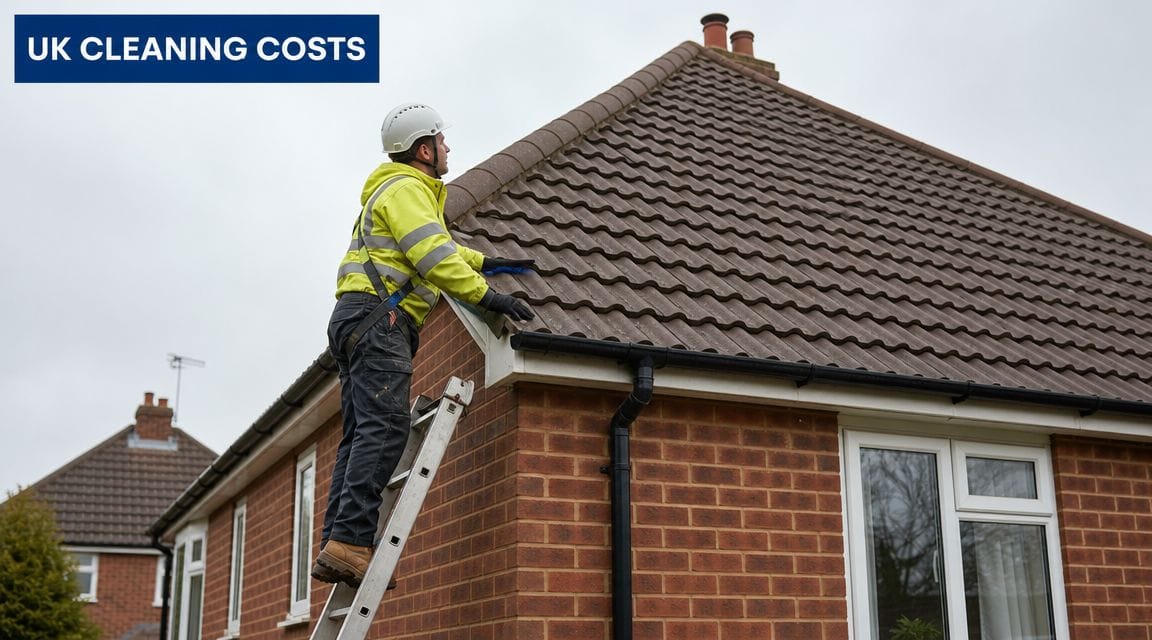
Some homeowners still expect roof cleaning services to be priced like a quick exterior wash. They aren't. Roof work often includes inspection, debris handling, access equipment, and post-clean treatment. That's why a cheap quote with very little detail should make you cautious.
Typical UK price ranges
UK pricing benchmarks report typical roof cleaning at £8.50 to £14 per m², with soft washing averaging £12 to £16 per m². The same guidance notes that scaffolding or cherry-picker hire can add £200 to £600, depending on access requirements, according to this UK roof cleaning cost and process guide.
Separate UK cost guides also place roof cleaning for an average domestic property at around £250 to £700, with more complex jobs rising above £1,000 depending on access, pitch, and contamination level, as summarised in this roof cleaning pricing overview.
What changes the final quote
A roof cleaner isn't only pricing the visible dirt. They're pricing the working conditions and the risk.
| Cost factor | Why it matters |
|---|---|
| Roof size | Larger roof areas increase labour, treatment volume, and cleanup time |
| Roof pitch | Steeper roofs slow the work and may need more controlled access |
| Access around the property | Limited access can push the job into scaffolding or elevated platform territory |
| Amount of moss or debris | Heavy buildup usually means more manual removal and more waste handling |
| Chosen method | Soft washing, manual scraping, and treatment all carry different labour and material needs |
How to compare quotes properly
Don't compare roof cleaning services using the bottom-line figure alone. Compare the scope.
Look for itemised details such as:
- Access method being used
- Whether gutters are cleared during or after the job
- How debris will be collected
- Whether a biocide treatment is included
- What areas are protected, including downpipes, walls, patios, and planting
A detailed quote often looks higher because it reflects the work involved. A thin quote may only be cheaper because it leaves out important stages. If one company plans a careful manual removal and treatment process while another offers to wash the roof quickly, those are not equivalent roof cleaning services.
Your Checklist for Vetting a Roof Cleaning Provider
A roof cleaner shouldn't be hired on trust alone. You need evidence. The UK market has shifted away from aggressive pressure washing towards specialist soft-wash treatments because of insurance, safety, and roof-preservation concerns, which is why homeowners should ask directly about methods and insurance coverage, according to this industry summary on roof cleaning methods and pricing.
That shift matters because anyone can advertise roof cleaning services online. Not everyone doing it has the right cover, the right process, or the right experience with your roof type.
The non-negotiables
Start with the basics, and don't skip them because the cleaner seems friendly or local.
- Insurance proof: Ask to see current Public Liability cover. Don't settle for “yes, we're insured”. For a plain-English overview of what this type of cover is designed to address, Coverage Axis general liability solutions give a useful background explanation.
- Method for your roof type: Ask exactly how they clean concrete tile, clay tile, or slate. The answer should be specific, not generic.
- Work at height procedure: They should explain how they access the roof, control movement, and protect people below.
- Runoff and property protection: Ask how they protect gutters, downpipes, gardens, patios, render, and parked vehicles.
- Debris handling: Moss and sludge shouldn't just be washed into the drainage system.
Questions that reveal whether they know their job
A capable contractor should be comfortable with direct questions. If the answers get vague, that tells you plenty.
Ask these before accepting a quote
Have you worked on this roof material before?
Experience on one surface doesn't automatically transfer to another.Are you cleaning, treating, or both?
Those are different scopes of work.Will you inspect for existing damage before starting?
This protects both sides and reduces later disputes.What happens if you find cracked or loose tiles?
The answer should be procedural, not improvised.What aftercare should I expect?
A good cleaner should tell you what may continue to come down into gutters and what to watch after rainfall.
If a provider can explain the method, the access plan, and the insurance without getting defensive, that's a good sign.
How to check trust signals without wasting time
Many lack the time to ring half a dozen firms and cross-check every detail manually. That's why a directory approach can help, provided the platform shows meaningful vetting signals rather than just a business name and phone number.
If you want to understand what those checks should look like, Cleaner Connect explains its process in how we vet our cleaners and build trust from the start.
Red flags worth taking seriously
Some warning signs show up before the job even starts:
- They recommend pressure washing immediately without asking about roof age or material
- They avoid showing insurance documents
- The quote is short and unclear
- They can't explain runoff protection
- They promise a result but not the method
- They dismiss safety questions as overthinking
Roof cleaning services are one of those trades where reassurance isn't enough. Specifics matter.
Find Vetted Local Cleaners with Cleaner Connect
Once you know what to check, the hard part is finding providers who show that information clearly. Search results often mix established contractors, lead-gen listings, and one-page ads with very little detail behind them. That's where a directory can save time, if it lets you evaluate the cleaner before you make contact.
Cleaner Connect UK Ltd is a UK online directory, not a cleaning company. It lets homeowners search by service and location, browse cleaner profiles, review vetting signals, and message professionals directly. For roof cleaning services, that matters because you can screen for trust factors before anyone steps onto your property.
What to look for in a directory profile
A useful directory profile should help you answer practical questions quickly.
- Has insurance been checked
- Has ID been checked
- Are there reviews that help build a picture of reliability
- Does the profile clearly cover the service you need
- Can you contact the provider directly without guesswork
That's much more useful than a bare listing with no context. Roof cleaning services involve enough risk that “we found them on Google” isn't really a screening process.
Using a directory well
A directory doesn't replace your judgement. It shortens the shortlist.
Start with a local search, then compare profiles for roof cleaning services in your area. Read how each provider describes their methods. Look for mention of soft washing, moss removal, access planning, and insurance. Then message the ones who appear to fit the job and ask the vetting questions from the previous section.
If you need a practical starting point for the search process itself, this guide on how to find a local cleaner is worth a read.
Why local visibility still matters
Roof cleaning is still a local trade. The company that turns up needs to understand local housing stock, access constraints, and the kinds of roof issues common in the area. That's one reason local search quality matters so much for tradespeople. If you're curious how service businesses improve that visibility, Bare Digital's local SEO tips give a useful overview from the business side.
A good directory doesn't make the decision for you. It makes it easier to avoid blind decisions.
For homeowners, landlords, and letting agents, that's the key benefit. You spend less time chasing unreliable leads and more time comparing providers on the things that are important.
Protecting Your Home with the Right Choice
A roof clean isn't just about appearance. It's part of protecting a major part of the property from avoidable wear, drainage issues, and poor maintenance decisions. The right roof cleaning services can remove buildup safely and help you stay ahead of bigger problems. The wrong ones can create them.
That's why method, insurance, and vetting matter more than a fast quote or a dramatic before-and-after photo. You want a contractor who understands your roof type, works safely at height, protects the surrounding property, and explains the process clearly before starting.
Most problems happen when people hire in a rush and check price before they check risk. A more careful approach usually pays for itself in fewer surprises, better workmanship, and less chance of roof damage.
If you're comparing roof cleaning services and want a simpler way to shortlist local providers, browse Cleaner Connect UK Ltd to search by area, review verified profile details, and contact cleaners directly.