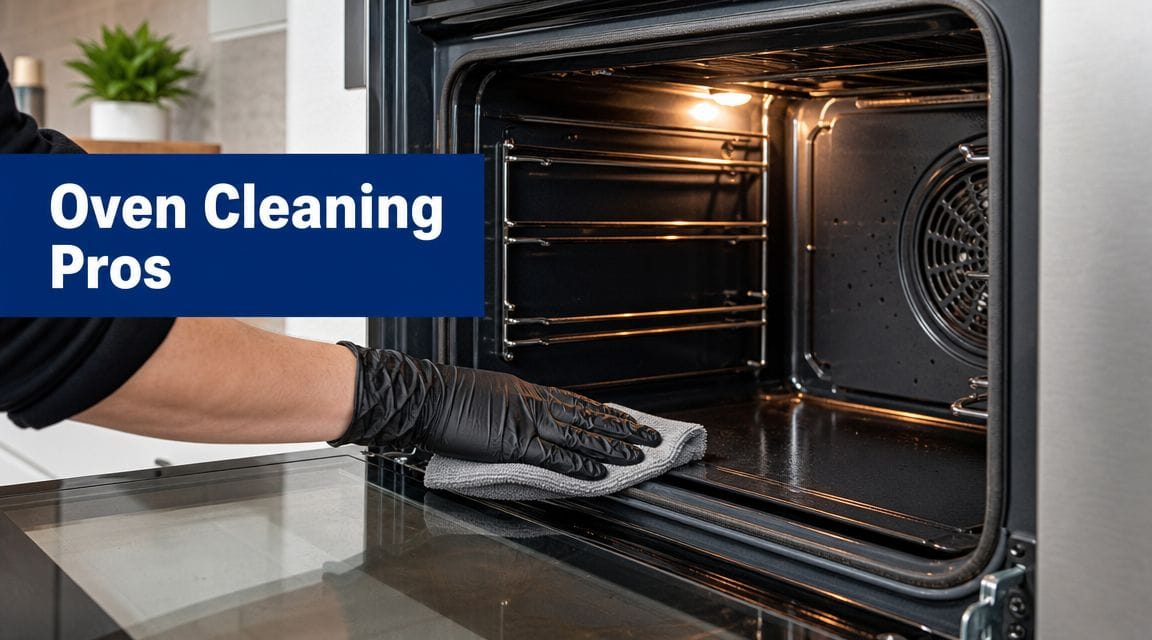
The oven usually doesn’t become a problem all at once. It creeps up on you. A splash on the base turns into baked-on grease, the inside of the glass clouds over, and every time you open the door you make a mental note to deal with it later.
If you manage a home, a rental, or a kitchen that gets used properly, that sort of grime is more than cosmetic. It becomes one of those jobs people put off because DIY oven cleaning is messy, awkward and easy to get wrong. That’s where professional oven cleaning services make sense. The trick isn’t just booking someone. It’s booking the right person, asking the right questions, and knowing what a proper service should look like.
Why Bother with a Professional Oven Clean
One often starts with the same plan. Buy an oven cleaner, leave it on for a while, scrub hard, rinse, then hope the smell disappears before the next meal. Sometimes it works well enough. Often it turns into an afternoon of scraping grime out of corners and trying not to get cleaner on seals, trims or flooring.

That’s why I treat professional oven cleaning services as maintenance rather than a luxury. The wider UK cleaning services market is projected to grow at a 9.4% CAGR from 2026 to 2033, and oven cleaning sits inside that broader demand for outsourced cleaning work, according to Grand View Research’s UK cleaning services market outlook. The same source also notes that guidance commonly recommends a professional oven clean once or twice a year for households that cook regularly. That tells you something important. This isn’t a niche emergency purchase. It’s a repeat service people use to stay on top of a difficult job.
Why DIY often falls short
A domestic oven has awkward parts. Door glass, racks, trays, fan covers, seals and side panels all collect dirt differently. Burnt sugar behaves differently from old grease. A quick spray-and-wipe job rarely deals with all of it.
The bigger issue is control. A proper cleaner works through dismantling, degreasing, rinsing and reassembly in a set order. Most DIY attempts skip one of those stages because the work is unpleasant or time is short.
Practical rule: If you keep delaying the job because you know it will take half a day and leave the kitchen smelling harsh, it’s already a candidate for a professional clean.
Why it makes sense in real homes
For homeowners, the benefit is obvious. You get the time back and avoid trial-and-error with strong products. For landlords and letting agents, it’s even simpler. A clean oven changes how a whole kitchen feels at inspection.
If the rest of the room needs attention too, it helps to see the appliance as part of a bigger kitchen reset rather than a standalone rescue job. Cleaner standards usually improve when the space around the oven is considered as well, which is why this ultimate kitchen deep clean guide is worth reading alongside any plan to book professional oven cleaning services.
Finding and Vetting Your Oven Cleaning Pro on Cleaner Connect
Finding an oven cleaner isn’t the hard part. Filtering out the vague profiles, weak descriptions and unanswered safety questions is the hard part. That’s why the vetting stage matters more than the initial search.
When I shortlist professional oven cleaning services, I want to know three things quickly. Who this person is, whether they’re insured, and whether previous customers describe a process that sounds organised rather than rushed.
Build a shortlist properly
Start with your area and the service category you need. Don’t search broadly for “cleaner” and hope the right person appears. Look specifically for oven cleaning so you’re seeing people who offer that work as a named service.
Then slow down and read the profile details. A strong profile should help you answer practical questions before you send a message.
- Identity matters: An ID checked marker helps confirm the person behind the listing has been through a basic identity verification step.
- Insurance matters more than people think: An insurance verified signal matters because oven cleaning involves dismantling components and working around an electrical appliance in your kitchen.
- Reviews should mention specifics: Look for comments about punctuality, care with the property, communication, and whether the oven was reassembled properly. Generic praise is nice. Detailed feedback is more useful.
One factual place to understand those trust markers is Cleaner Connect’s page on how cleaner vetting works and what’s checked from the start.
What a good profile usually tells you
I trust profiles that describe the work in plain language. If someone explains the oven types they handle, how they approach removable parts, what products they use, and what the customer should do before arrival, that’s a good sign.
Weak profiles often hide behind broad claims. They say they’re “high quality” or “professional” but don’t explain the actual service. That’s not enough when you’re inviting someone into your home to work on an appliance with delicate coatings, glass and fittings.
A reliable listing reduces uncertainty before you ever send the first message.
Use messaging to test responsiveness
A short message can tell you a lot. Ask what they need from you to quote properly. A careful cleaner may ask for the oven type, how long it’s been since the last clean, whether it’s single, double or range-style, and whether you want extras such as the hob or extractor addressed.
That kind of response usually means they’re estimating a real job, not throwing out a guess.
If you’re interested in how home service businesses present themselves clearly online, this guide to AI content for house cleaning businesses is useful background. It shows why the better providers answer customer concerns directly instead of relying on generic sales language.
A simple vetting checklist
Before you book, your shortlist should feel smaller and sharper. I’d keep only the people who give you confidence on these points:
They describe the service clearly
You should understand what’s included and what isn’t.They answer questions directly
Evasive replies are usually a bad sign.Their profile shows trust signals
ID checks, insurance verification and customer feedback all help reduce risk.They sound appliance-aware
Newer ovens aren’t all cleaned the same way.
This is the point where an online directory is useful. Cleaner Connect UK Ltd is a directory, not a cleaning company, and it gives you a way to search by category and location, review verified profile details, and message providers directly without treating every enquiry like a blind gamble.
What to Expect During the Cleaning Process
On the day, a proper oven clean should feel methodical. The cleaner arrives, checks the appliance, protects the immediate work area, and talks through anything unusual before they start. If the kitchen is tight or the oven is heavily soiled, they should say so early rather than muddling through.

The job usually starts with dismantling
A cleaner will normally remove racks, trays and other detachable parts first. The inside glass, cavity, door edges and awkward corners are where the time goes. That’s one reason professional oven cleaning services are different from a quick domestic wipe-down.
The kitchen should stay controlled while they work. Reputable cleaners should use non-caustic, fume-free products, and it’s sensible to ask whether any solution contains sodium hydroxide, because that can create harsher fumes indoors. That guidance is set out in this UK consumer advice on questions to ask an oven cleaner before booking.
On the day: You shouldn’t be dealing with heavy chemical smells drifting through the house.
What a careful cleaner pays attention to
Good oven cleaning is detail work. A rushed cleaner focuses on the obvious surfaces. A careful one checks the spots customers notice later.
- Door glass: Streaks and trapped residue are quickly visible on this surface.
- Edges and seals: These areas need care, not aggression.
- Removable parts: Trays, shelves and supports should come back clean and dry.
- Final reassembly: The oven should look complete, not “mostly done”.
The service is often sold as a controlled alternative to DIY because it removes the burden of disassembly, degreasing and reassembly from the homeowner. In practice, that’s exactly where the value sits. Anyone can scrub a visible patch. Not everyone can take components apart, clean around them properly, and put everything back with confidence.
Before they leave
A decent finish should be obvious without theatrics. The cleaner may run through what was cleaned, mention any staining that’s permanent rather than dirty, and point out anything they chose not to disturb for safety or appliance reasons.
That last part matters. A trustworthy cleaner doesn’t pretend every oven is the same.
Understanding Costs and Deciphering Quotes
Oven cleaning quotes vary because the work varies. That’s the honest answer. A simple, maintained single oven is one job. A heavily soiled double oven with extra components is another.
The mistake customers make is comparing quotes as if they all describe the same workload. They don’t.
Why one cleaner asks more questions
A solid quote is usually built by estimating discrete tasks such as the door, racks and cavity, rather than throwing out one flat figure. Industry guidance on cleaning production rates recommends task-by-task estimating because more complex or heavily soiled work can take much longer than standard maintenance cleaning, as explained in this analysis of production rates for bidding and estimating cleaning work.
That’s exactly how experienced oven cleaners think. They’re looking at the appliance type, how dirty it is, how much dismantling is required, and how long the dwell and rinse stages are likely to take.
Cheap quotes can be expensive if they force the cleaner to rush the difficult parts.
What affects your quote
| Factor | Typical Impact on Price |
|---|---|
| Oven size and type | Larger or more complex appliances usually need more labour |
| Condition | Heavy build-up usually means more dwell time, scraping and rinsing |
| Removable components | More parts to dismantle and reassemble usually adds time |
| Extras requested | Hobs, extractor fans or additional kitchen items can increase the quote |
| Access and layout | Tight spaces or awkward kitchen setups can slow the job down |
How to read a quote sensibly
Look beyond the number. Ask what’s included, what assumptions the cleaner has made, and whether the quote is based on photos or a verbal description.
A quote that sounds low may exclude awkward work, detailed reassembly checks or any allowance for very heavy grease. A cleaner who prices carefully is often protecting both sides from a bad job and a bad conversation afterwards.
If you want a wider sense of how cleaning costs are usually framed in home services, this guide on how much a house cleaner costs is a useful comparison point. The same principle applies. Time, complexity and scope drive the price more than a headline rate ever will.
Your Role Before and After the Clean
The best oven cleaning appointments are straightforward because the customer has done a few simple things first. You don’t need to pre-clean the appliance, but you do need to make the job easy to carry out safely.
Before the cleaner arrives
Give them room to work. Clear clutter from the worktops near the oven and move anything delicate out of the immediate area. If you’ve stored trays, pans or chopping boards in the oven or drawer below, take those out first.
A few basics help more than people realise:
- Make the appliance accessible: Don’t leave the cleaner shifting bins, stools or stored items just to reach the oven.
- Keep children and pets out of the area: Even careful jobs involve tools, hot water and removed components.
- Mention any faults in advance: If the door sticks, the bulb has failed, or a panel feels loose, say so before work starts.
After the clean
The easiest way to protect the result is to stop small mess becoming hard build-up again. Wipe spills when the oven has cooled, especially sugary drips and roasting fat. If you use liners, make sure they’re suitable for your appliance and fitted correctly.
For households that cook regularly, periodic professional maintenance makes more sense than waiting until the oven becomes a major rescue job. That’s especially true in rentals, holiday lets and busy family kitchens where the appliance takes constant use.
The clean lasts longer when daily habits improve, even slightly.
Essential Questions to Ask Before You Book
A booking message shouldn’t just ask for price and availability. It should test whether the cleaner understands your oven and works in a way that protects it.
That matters even more with modern appliances. A key customer concern is whether cleaning is safe for self-cleaning, catalytic or steam-clean ovens, and what parts should be avoided to prevent damage to coatings or warranty issues. That concern is highlighted in this guide to oven cleaning methods and appliance-specific care.
Ask these questions directly
Are you insured for this type of work?
Keep it simple. You want a clear yes, not a vague reassurance.What products do you use inside the home?
Ask whether they use non-caustic, fume-free products and whether anything contains sodium hydroxide.Have you cleaned this oven type before?
Brand matters less than method, but appliance type matters a lot.What parts do you remove and clean?
This helps you understand scope and whether the quote matches the work.Are there any parts you won’t touch? Why?
A good answer here is reassuring. It shows judgement.
What confident answers sound like
A trustworthy cleaner doesn’t act offended by careful questions. They answer plainly, explain limits where needed, and tell you if your appliance needs a gentler or more restricted approach.
That’s the final check before booking professional oven cleaning services. If a cleaner can explain their method, their products and their appliance awareness without dodging, you’re in much safer hands than someone who only wants to race to the price.
If you’re ready to compare local options, Cleaner Connect UK Ltd lets you search for oven cleaning professionals by area, review verified profile details, and message cleaners directly so you can shortlist with more confidence before you book.